How Much Does Asphalt Driveway Repair Cost?
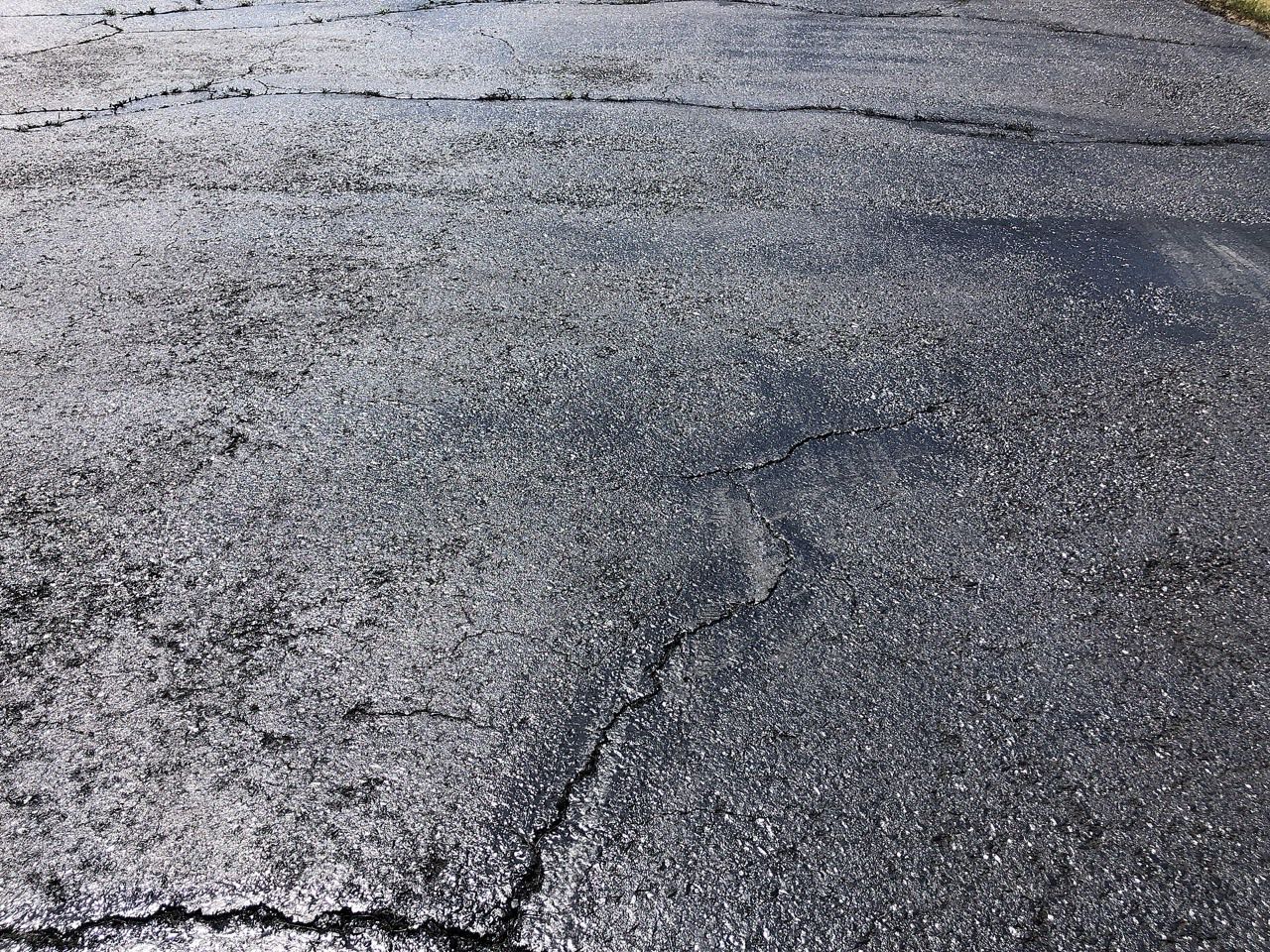
If you own a home in New Jersey, your asphalt driveway takes a beating. Between the freeze-thaw cycles every winter, the summer heat softening the surface, and the salt trucks running through your neighborhood, it is only a matter of time before cracks, potholes, or crumbling show up.
The question is not whether your driveway will need repair. The question is how much it will cost and whether you are better off patching, resurfacing, or replacing the whole thing.
I have been repairing driveways across six NJ counties for years, and the number one thing homeowners get wrong is waiting too long. A $200 crack repair in March turns into a $2,000 resurfacing job by November because water gets in, freezes, expands, and destroys the base. This guide gives you the real numbers so you know what to expect before you call a contractor.
Asphalt Driveway Repair Cost Overview
The cost of repairing an asphalt driveway depends on what is wrong with it, how big the damaged area is, and where you live. Here is how national and NJ averages compare.
| Metric | National Average | NJ Average |
|---|---|---|
| Average repair cost | $500-$2,500 | $600-$3,000 |
| Low-end (crack filling) | $100 | $100 |
| High-end (major repair) | $4,000+ | $5,000+ |
| Per square foot (patch) | $2.00-$5.00 | $1.83-$3.25 |
Sources: National figures from Forbes Home, Fixr, Angi, and HomeGuide (consensus of 5 cost databases). NJ per-sqft average from ProMatcher NJ Cost Report (contractor-submitted statewide data).
NJ homeowners consistently pay more than the national average. According to NJ Department of Labor prevailing wage data, asphalt laborers in New Jersey earn $51-$56 per hour in base pay -- and that is before fringe benefits push the total to over $90 per hour on public projects. Private residential rates are lower, but NJ labor still runs 15-25% above what contractors charge in most other states.
That higher labor cost, combined with the damage our winters cause, means NJ driveways need more frequent repairs and those repairs cost more. But the good news is that catching problems early keeps costs on the low end of these ranges.
Asphalt Driveway Repair Cost by Damage Type
Not all driveway damage is the same, and the type of damage is the biggest factor in what you will pay. Here is what each type of repair typically costs.
| Damage Type | Cost Range | Common Cause |
|---|---|---|
| Hairline cracks | $100-$400 | Normal aging, sun exposure, temperature changes |
| Potholes | $100-$400 | Water seeping into cracks, freeze-thaw expansion |
| Crumbling edges | $300-$1,500 | Poor original edging, vehicle tire damage, erosion |
| Sunken areas | $500-$3,000 | Base failure, poor compaction, underground drainage issues |
| Apron repair (by garage) | $200-$1,000 | Heavy vehicle weight, transition stress between surfaces |
| Tree root damage | $300-$1,200 | Roots growing under surface, lifting and cracking asphalt |
| Grass growing through | $150-$550 | Thin asphalt, deteriorated base, sealcoat failure |
Sources: Cost ranges cross-referenced from Fixr, HomeGuide, and Angi cost databases.
Cracks
Cracks are the most common problem and the cheapest to fix if you catch them early. Small hairline cracks can be sealed with liquid crack filler for $100-$400 depending on how many linear feet need attention. According to HomeGuide, crack filling runs about $0.50-$3.00 per linear foot.
In New Jersey, cracks spread faster than in warmer states. Water gets into a small crack in the fall, freezes and expands through the winter, and by spring that hairline crack is a quarter-inch wide. One winter can turn a $100 crack seal job into a $500 patching job.
Potholes
Potholes form when water undermines the base layer beneath the asphalt. In NJ, this happens faster because our freeze-thaw cycles loosen the aggregate base. A single pothole repair typically costs $100-$400 according to Fixr and HomeGuide. Larger areas with multiple potholes push toward the higher end.
Crumbling and Alligator Cracking
When you see a pattern that looks like alligator skin across your driveway, the surface has failed. This usually means the base is compromised, not just the top layer. Repairs run $300-$1,500 depending on how much area is affected. If more than 25-30% of your driveway shows alligator cracking, you are likely looking at resurfacing or replacement rather than spot repairs.
Sunken Areas
A sunken or settled area means the ground underneath has shifted. In NJ, our clay-heavy soils are particularly prone to this -- clay expands when wet and contracts when dry, creating movement under the asphalt. Fixing sunken areas costs $500-$3,000 because the contractor has to cut out the damaged section, fix or replace the base, compact it, and then lay new asphalt.
Tree Root Damage
If you have mature trees near your driveway, roots can lift and crack the asphalt from underneath. This is one of the more expensive repairs ($300-$1,200) because fixing it means removing the root, repairing the base, and re-paving that section. And no, homeowners insurance does not cover tree root damage -- more on that later.
Asphalt Repair Cost Per Square Foot
When contractors give you a quote, they often price by the square foot. The method they use to make the repair is the biggest factor in per-sqft pricing.
| Repair Method | Cost per Sq Ft | Best For |
|---|---|---|
| Cold patch | $2-$4 | Temporary pothole fills, small DIY repairs |
| Hot patch | $2-$5 | Permanent pothole and crack repair |
| Infrared repair | $2-$6 | Seamless patch that blends with existing surface |
| Saw cut and replace | $4-$12 | Large damaged areas, structural base failure |
Sources: Per-sqft data from HomeGuide contractor database and Forbes Home. NJ statewide average for asphalt patching is $2.54/sqft ($1.83-$3.25 range) per ProMatcher NJ Cost Report.
Cold patch is the cheapest option at $2-$4 per square foot according to HomeGuide. It is what you find in bags at the hardware store. It works for temporary fixes but does not bond permanently to the existing asphalt. In NJ winters, cold patches often pop out within a year.
Hot patch runs $2-$5 per square foot and is the standard professional repair. The contractor heats fresh asphalt to 300+ degrees and bonds it directly to the existing surface. This creates a permanent repair that can last as long as the rest of the driveway.
Infrared repair is the premium option at $2-$6 per square foot. The contractor uses an infrared heater to soften the existing asphalt around the damaged area, adds new material, and re-compacts it all together. The result is a nearly invisible, seamless repair. It costs more but eliminates the seam where water can get in -- a real advantage in NJ where water infiltration is the primary cause of driveway failure.
Saw cut and replace is reserved for larger damaged sections and runs $4-$12 per square foot per HomeGuide. The contractor saws out the damaged section, removes it, checks and repairs the base, and lays new asphalt. This is essentially a mini-replacement and is the most expensive per-sqft option, but it is the right call when the base underneath has failed.
In New Jersey specifically, the ProMatcher NJ Cost Report shows the statewide average for asphalt patching at $2.54 per square foot, with a range of $1.83-$3.25. That tracks closely with the hot patch method, which is the most common professional repair in our area.
Asphalt Driveway Repair Cost by Solution
Another way to think about repair costs is by the scope of the solution, from the smallest fix to a full replacement.
| Solution | Cost Range | When to Choose |
|---|---|---|
| Crack filling | $100-$400 | Isolated cracks less than 1/2" wide |
| Patching | $100-$500 | Potholes, small damaged areas under 20 sqft |
| Sealcoating | $110-$1,500 | Preventive maintenance, minor surface wear |
| Resurfacing (overlay) | $500-$2,000 | Widespread surface damage, good base underneath |
| Full replacement | $3,000-$10,000 | Driveway over 20 years old, base failure, 30%+ damage |
Sources: Crack filling from Fixr, Angi, and HomeGuide. Patching from Angi, Fixr, and HomeGuide. Sealcoating from Angi and HomeAdvisor. Resurfacing from Fixr, Angi, and HomeGuide. Replacement from Angi and HomeGuide.
Crack filling is the most basic repair. A contractor cleans out the cracks, applies hot rubberized sealant, and smooths it over. According to Fixr, Angi, and HomeGuide, this typically runs $100-$400 depending on the total linear footage. This is the repair you should never put off -- a $150 crack fill in the spring prevents a $1,500 repair next year.
Patching addresses localized damage like potholes or broken-up sections. Most patch jobs run $100-$500 per Angi and HomeGuide. A typical residential patch covers 10-20 square feet.
Sealcoating is not a repair -- it is protection. A fresh sealcoat every 3-5 years fills minor surface imperfections, blocks UV damage, and prevents water from penetrating the surface. According to Angi and HomeAdvisor, sealcoating costs $110-$1,500 depending on driveway size. For NJ homeowners, sealcoating is the single best investment you can make to avoid expensive repairs. More on the ROI math below. See our full driveway sealcoating costs breakdown for NJ-specific pricing by county.
Resurfacing (also called an overlay) is for driveways where the surface is worn out but the base is still solid. The contractor lays 1.5-2 inches of new asphalt directly over the existing surface. Per Fixr, Angi, and HomeGuide, this runs $500-$2,000 for a typical residential driveway, or about $1-$3 per square foot. If you are seeing signs your driveway needs resurfacing, this is usually the most cost-effective option before the base fails.
Full replacement means tearing out the old driveway, re-grading and compacting the base, and laying fresh asphalt from scratch. According to Angi and HomeGuide, this costs $3,000-$10,000, or $4-$10 per square foot. Check out our asphalt paving costs page for NJ-specific replacement pricing.
What Affects Asphalt Driveway Repair Cost?
Seven main factors determine what you will actually pay for a driveway repair in NJ.
Damage Severity
This is the obvious one. A 10-foot crack costs less to fix than 200 square feet of alligator cracking. The more damage, the more material, labor, and time required.
Driveway Size
Most NJ driveways are 400-800 square feet. Larger driveways cost more to repair in absolute terms but often cost less per square foot because the contractor is already on site with equipment.
Accessibility
If a truck and equipment can pull right up to the damaged area, the job goes faster and costs less. If your driveway is behind a gate, on a slope, or hard to access, expect to pay more. Contractors charge for the extra time and effort.
Material Costs
Hot-mix asphalt runs $100-$150 per ton according to AsphaltCalculators.org and multiple industry sources. For a small patch job, the material cost is minimal. For resurfacing or replacement, material is a significant portion of the bill. Asphalt prices fluctuate with petroleum costs -- when oil prices spike, asphalt costs follow.
NJ Labor Rates
Labor is the biggest cost driver, and NJ labor rates are among the highest in the country. According to NJ Department of Labor data (effective March 2025), the prevailing wage for an asphalt laborer is $51.65 per hour base pay, with fringe benefits pushing the total to over $90 per hour. Those rates apply to public works, but private residential labor in NJ still runs $50-$150 per hour according to HomeAdvisor and Angi -- well above the national average.
Permits
Some NJ municipalities require permits for driveway work, especially for full replacements. Permit costs vary by town but typically add $50-$200 to the project. Your contractor should handle the permitting, but ask upfront so there are no surprises.
Time of Year
In NJ, there is a definite seasonal pattern to driveway repair pricing. Spring is the busiest season -- everyone notices winter damage once the snow melts and calls for repairs at the same time. That high demand can mean higher prices and longer wait times. Late summer and early fall are typically the best times to get repair work done in NJ. The weather is warm enough for proper asphalt curing, demand has leveled off, and you get your driveway protected before winter hits.
Repair vs. Replace: When Each Makes Sense
This is the decision most homeowners struggle with. Here is a straightforward framework.
| Factor | Repair | Replace |
|---|---|---|
| Driveway age | Under 15 years | Over 20 years |
| Damage coverage | Less than 25% of surface | More than 30% of surface |
| Base condition | Base is solid | Base has failed (sinking, heaving) |
| Cost range | $100-$2,000 | $3,000-$10,000 |
| Timeline | 1 day or less | 2-5 days |
| Best for | Isolated damage, good structure | End-of-life driveway, widespread failure |
Sources: Decision thresholds based on Asphalt Institute guidelines and Fixr/Angi repair-vs-replace analysis.
The rule of thumb is this: if the repair cost exceeds 30-40% of what a full replacement would cost, you are better off replacing. You will get a brand new driveway with a full lifespan ahead of it instead of patching something that will keep breaking down.
According to the Asphalt Institute, a well-maintained asphalt driveway lasts 15-20 years. With regular sealcoating every 3-5 years, that lifespan extends to 25-30 years. If your driveway is under 15 years old and the damage is isolated, repair almost always makes more sense. If it is over 20 years old and you are calling for repairs every year, replacement is the smarter long-term investment.
The hidden costs of delaying repairs add up fast. What starts as a $200 crack fill can become a $5,000 replacement if you let it go for a few years.
How Sealcoating Prevents Expensive Repairs
Here is where the math gets interesting. Regular professional sealcoating is the cheapest way to avoid the repair costs outlined above.
| Scenario | Cost per 600 sqft | Frequency | 20-Year Total |
|---|---|---|---|
| Sealcoating every 3-5 years | ~$252 per application | 5-6 times over 20 years | $1,260-$1,512 |
| Major repair (no sealcoating) | $1,200-$3,000 per repair | Every 8-10 years | $2,400-$6,000 |
| Early replacement (no maintenance) | $3,000-$10,000 | Once at year 15 | $3,000-$10,000 |
Sources: Sealcoating cost calculated from ProMatcher NJ average of $0.42/sqft ($0.28-$0.56 range) applied to a 600 sqft driveway. Repair and replacement costs from consensus data above. Sealcoat frequency per Asphalt Institute recommendation (every 3-5 years).
According to ProMatcher NJ data, the statewide average for residential sealcoating is $0.42 per square foot, with a range of $0.28-$0.56 per square foot. For a typical 600 square foot NJ driveway, that works out to roughly $252 per application.
Compare that to repair costs of $2-$5 per square foot (ProMatcher NJ average: $2.54/sqft). For that same 600 square foot driveway, a repair runs $1,200-$3,000.
Over 20 years, a homeowner who sealcoats every 3-5 years as the Asphalt Institute recommends will spend roughly $1,260-$1,512 on sealcoating and likely avoid any major repairs. A homeowner who skips sealcoating will spend $2,400-$6,000 on repairs -- or $3,000-$10,000 on an early replacement when the driveway fails at year 15 instead of lasting to year 25-30.
Sealcoating is not a repair. It is insurance against needing one. Check our driveway sealcoating costs page for county-by-county NJ pricing.
DIY vs. Hiring a Professional
You can buy a bag of cold-patch asphalt at any hardware store for $8-$20 per 50-pound bag, per HomeAdvisor. Crack filler tubes run $5-$15 each. So why not do it yourself?
For hairline cracks and tiny potholes, DIY can work as a temporary fix. But there are real limitations.
DIY repairs last about one year. Cold patch material does not bond permanently to existing asphalt. In NJ, where freeze-thaw cycles stress every repair, a DIY patch typically pops out or crumbles within one winter. You will redo the same repair every spring.
DIY cannot fix structural problems. If your driveway is sinking, the base has failed, or alligator cracking covers a large area, no amount of cold patch will fix it. These problems require excavation, base repair, and hot-mix asphalt -- work that requires professional equipment.
Professional repairs come with lasting results. A contractor uses hot-mix asphalt heated to 300+ degrees that bonds permanently to the existing surface. A properly done hot patch or infrared repair can last as long as the rest of the driveway. Many professional contractors also offer warranties on their work.
When DIY makes sense: Filling a few small cracks (under 1/4 inch wide) with liquid crack filler as a temporary measure until you can schedule professional work. That is about it.
When to call a pro: Potholes, cracks wider than 1/4 inch, any crumbling or sinking, alligator cracking, or any area larger than a few square feet.
Does Homeowners Insurance Cover Driveway Repair?
This is a question I get from NJ homeowners all the time, and the answer depends on what caused the damage.
Insurance typically covers: - Storm damage (wind, hail, heavy rain impact) -- covered as a standard peril per Progressive and Acceptance Insurance - Fallen tree damage -- covered if the tree was knocked down by a storm or died naturally - Vandalism -- covered under most standard homeowners policies
Insurance does NOT cover: - Normal wear and tear -- no insurer covers aging or gradual deterioration - Cracking from freeze-thaw cycles -- considered normal maintenance, not a covered peril - Tree root damage -- classified as a maintenance issue, not sudden damage, per Progressive and Clovered - Flooding -- requires a separate flood policy - Settling or sinking -- considered a pre-existing condition or maintenance issue
Sources: Coverage guidelines from Progressive (progressive.com), Acceptance Insurance (acceptance.com), and Clovered (clovered.com).
The takeaway: if a storm dropped a tree on your driveway last night, call your insurance company. If your driveway is cracking because it is 18 years old and has never been sealed, that is on you. Regular maintenance -- especially sealcoating -- is the homeowner's responsibility and the most effective way to prevent the kind of damage insurance will not cover.
Frequently Asked Questions
How much does it cost to repair an asphalt driveway?
Most asphalt driveway repairs cost between $100 and $2,500, with the national average around $500-$2,500 according to data from Forbes Home, Fixr, Angi, and HomeGuide. In New Jersey, expect to pay 15-25% more than the national average due to higher labor costs. Simple crack filling runs $100-$400, patching costs $100-$500, and resurfacing runs $500-$2,000. The ProMatcher NJ Cost Report puts the NJ average for asphalt patching at $2.54 per square foot.
Can you repair just part of an asphalt driveway?
Yes. Most driveway repairs are partial -- you only fix the damaged area. A contractor can patch potholes, fill cracks, or saw-cut and replace a specific section without touching the rest of the driveway. This is the most cost-effective approach when the damage covers less than 25% of the surface and the base underneath is still solid.
Is it cheaper to repair or replace an asphalt driveway?
Repair is almost always cheaper in the short term. A typical repair runs $100-$2,000 compared to $3,000-$10,000 for a full replacement per Angi and HomeGuide. However, if your driveway is over 20 years old or repair costs exceed 30-40% of replacement cost, replacing gives you better long-term value because you get a brand new surface with a full 15-20 year lifespan.
How long does asphalt driveway repair last?
It depends on the repair method. A cold patch (DIY) typically lasts 1-2 years. A professional hot patch or infrared repair can last 8-15 years -- essentially as long as the surrounding asphalt. A full resurface adds 8-15 years to your driveway's life. According to the Asphalt Institute, the key to making any repair last is sealcoating over it every 3-5 years to protect the surface from water and UV damage.
Does homeowners insurance cover asphalt driveway repair?
Only if the damage was caused by a covered peril like a storm, fallen tree, or vandalism. According to Progressive and Acceptance Insurance, normal wear and tear, freeze-thaw cracking, tree root damage, and gradual aging are not covered. Flood damage requires a separate flood policy. Most driveway repair needs fall under routine maintenance, which is the homeowner's responsibility.
How long should a residential asphalt driveway last?
A properly installed asphalt driveway lasts 15-20 years according to the Asphalt Institute. With regular maintenance -- specifically sealcoating every 3-5 years and prompt crack repair -- that lifespan extends to 25-30 years. In NJ, where freeze-thaw cycles accelerate wear, consistent maintenance is even more important for reaching that upper range.
Will new asphalt stick to old asphalt?
New hot-mix asphalt will bond to old asphalt if the existing surface is properly prepared. The contractor needs to clean the area thoroughly, apply a tack coat (a sticky bonding agent), and lay the hot mix while it is still at proper temperature. Cold patch does not bond permanently, which is why DIY repairs with bagged material tend to fail within a year or two, especially in NJ winters.
What is the best time of year to repair an asphalt driveway?
In NJ, the best window for driveway repairs is late spring through early fall -- roughly May through October. Asphalt needs warm temperatures (at least 50 degrees Fahrenheit) to cure properly. Spring is the busiest season because everyone notices winter damage once the snow melts, which can mean higher prices and longer wait times. Late summer and early fall often offer the best combination of good weather, reasonable scheduling, and competitive pricing.
Get a Free Asphalt Driveway Repair Estimate in NJ
If your driveway is showing cracks, potholes, or crumbling, the worst thing you can do is wait. Water gets in, winter makes it worse, and a $200 fix becomes a $2,000 problem.
Randy Sealcoating and Striping serves homeowners and businesses across Union, Essex, Passaic, Middlesex, Bergen, and Morris counties. We handle everything from crack filling and pothole patching to full resurfacing and sealcoating.
Call Call Randy for a free estimate or visit randysealcoatingandstriping.com to request a quote online.
Ready to Protect Your Asphalt?
Get a free quote for professional asphalt maintenance and protection services. Our team is ready to help extend the life of your driveway or parking lot.