Sealcoating in Newark NJ: What Every Property Manager Should Know
If you manage a commercial property in Newark — an Ironbound restaurant strip, a downtown office lot, a North Ward medical plaza, a Port Newark freight yard, a West Ward apartment complex — the single most expensive asphalt mistake you can make is treating sealcoating as optional. In Newark, it is not optional. It is the difference between a 20-year lot and a 10-year lot, and the difference between a $1,500 annual line item and a $50,000 capital expenditure.
This guide walks you through what Newark property managers actually need to know about commercial sealcoating: why Newark asphalt fails faster than the suburbs, what the real cost structure looks like in 2026, how to time the work, how to spot when your lot is past sealcoat-recoverable, and what ADA compliance looks like when you restripe. If you are the person signing the check on your property's parking lot maintenance, this is the framework.
Why Newark Is Different From Every Other New Jersey City
Newark is not just another New Jersey municipality. It is the state's largest city, the busiest freight hub in the Northeast, and the front door for nearly every shipping container and air cargo pallet moving through the region. That reality shows up on every asphalt surface in the city.
Port Newark truck load. Port Newark-Elizabeth is one of the busiest container ports on the East Coast. The resulting tractor-trailer traffic moves through Newark's 6th Ward industrial blocks, along Doremus Avenue, Wilson Avenue, and the airport cargo corridor, 24 hours a day. Every parking lot, every service apron, every commercial driveway that touches this freight flow sees 10 to 50 times the axle weight of a residential driveway. That weight compacts, cracks, and ruts asphalt on a dramatically accelerated timeline.
60+ annual freeze-thaw cycles. Newark's winters cycle above and below 32°F roughly 60-70 times per season. Each cycle follows the same failure pattern: water seeps into any open crack during a thaw, refreezes overnight with about 9 percent volumetric expansion, and widens the crack by a fraction of a millimeter. Multiply that by 60 cycles per year across a decade, and every unfilled crack becomes a pothole.
Humid port-adjacent air. The Passaic River and the port keep Newark's air more humid than inland New Jersey. That matters because humidity extends asphalt surface dry time, complicates sealer cure, and accelerates oxidation of unprotected binder. Newark sealcoat jobs sometimes take an extra 12-24 hours to fully cure compared to a job in Morristown or Summit.
Aged sub-base inventory. Many Newark commercial lots were originally built in the 1960s-1980s with base layers that do not meet modern code. The surface asphalt can look fine while the sub-base fails — which is why some "small" pothole problems turn into "we need to dig out the whole corner" problems when we investigate. Proactive sealcoating protects the surface; it does not fix a failing sub-base, but it buys time.
The practical consequence of these four factors stacked together: Newark asphalt lifecycles run about 30 to 40 percent shorter than lifecycles in suburban New Jersey. Where a well-maintained lot in Westfield or Summit might last 25 years, a similar lot in Newark lasts 15-18 years unless aggressively maintained.
The Newark Sealcoat Decision Framework
Here is the decision framework we walk through with every Newark property manager on the first walk-through:
Question 1: When was the last sealcoat? If it has been 30 months or more, sealcoat is the top priority regardless of how the lot looks. If it has been under 24 months, sealcoat can wait; focus on crack fill and ADA restripe.
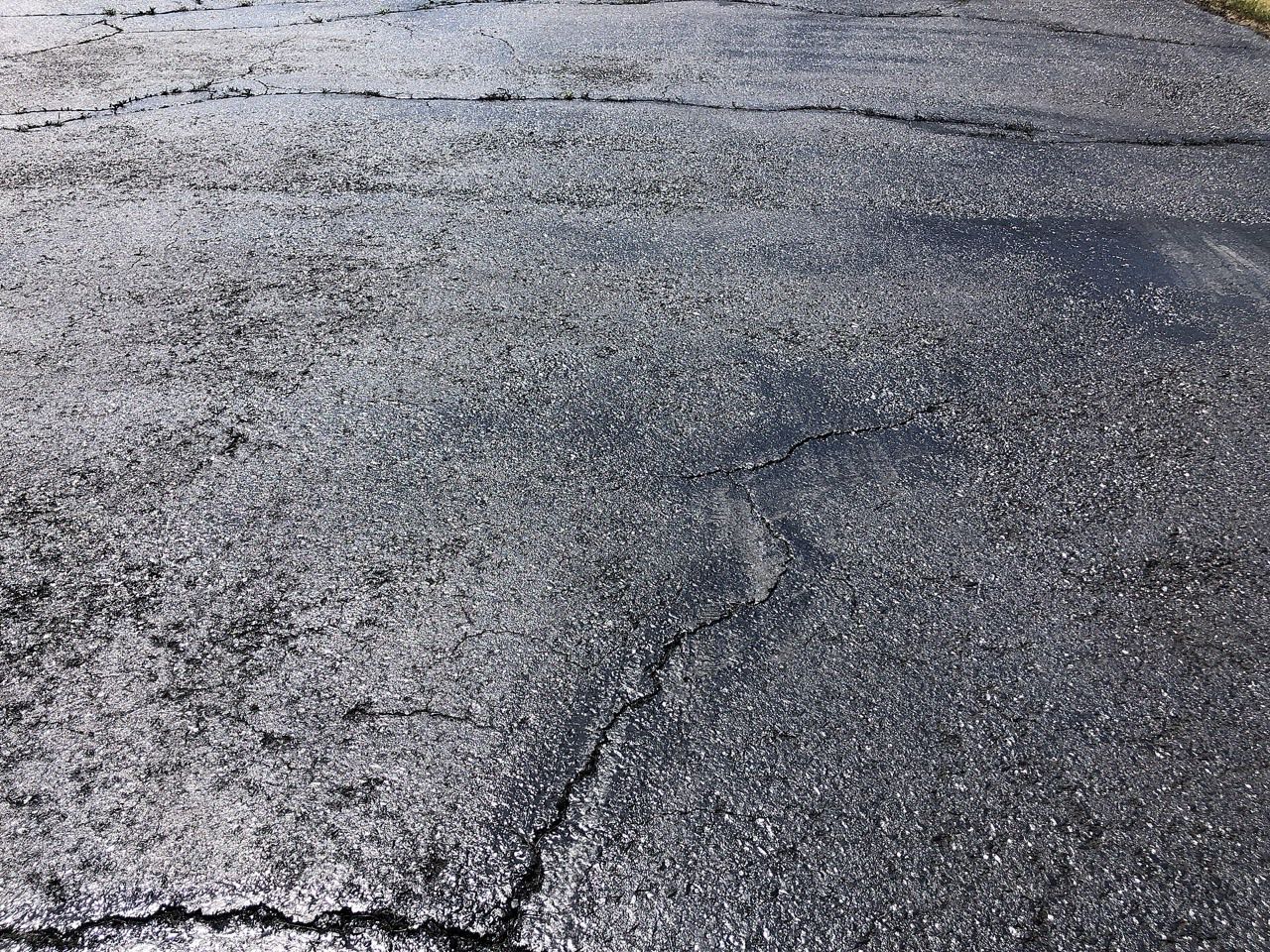
Question 2: What is the condition of the asphalt binder? Look at color and texture. If the asphalt is dark gray-black and the aggregate is still locked into the binder matrix, sealcoat will recover it. If the asphalt is light gray, loose aggregate is coming off in your hand, and the surface looks "raveled" — you are past sealcoat-recoverable. That lot needs overlay or full replacement.
Question 3: How aggressive is the commercial traffic? Light-use commercial (office parking, professional services) runs 30-36 month sealcoat cycles. Medium-use (retail, multi-tenant) runs 24-30 months. Heavy-use (restaurant with delivery, truck-heavy commercial, Port-adjacent) runs 18-24 months.
Question 4: Are there ADA compliance gaps? If your lot has not had an ADA layout review in 5+ years, you are almost certainly out of current compliance on van-accessible space ratio, signage, or accessible path grade. Sealcoat is the natural moment to also restripe — you save on mobilization and you address liability at the same time.
Newark Commercial Sealcoating Pricing in 2026
Newark commercial sealcoating runs between $0.14 and $0.22 per square foot, putting most Newark commercial lots in one of these ranges:
| Lot Type | Typical Size | 2026 Sealcoat Price | Notes |
|---|---|---|---|
| Ironbound restaurant / small retail | 5,000-10,000 sq ft | $900-$2,000 | Evening/Sunday work typical |
| Downtown office / medical plaza | 15,000-30,000 sq ft | $2,300-$4,800 | Phased weekend schedule |
| Mid-size commercial / multi-tenant | 30,000-60,000 sq ft | $4,500-$10,000 | Crack fill usually bundled |
| Large industrial / warehouse | 60,000+ sq ft | $10,000-$30,000+ | Heavy-duty sealer, phased crews |
| Port-adjacent truck yard | Varies | $25,000+ | Specialized prep, 3-inch surface specs where replacement needed |
Newark pricing runs about 10-15 percent above suburban New Jersey averages because of tighter work windows, higher mobilization cost, and the heavier commercial mix. For residential work (North Ward Forest Hill, South Ward Weequahic, West Ward Vailsburg), expect typical residential driveway sealcoat to run $250-$600 for a standard two-car driveway.
Budget-planning shortcut: A commercial Newark lot running on a well-maintained 24-30 month sealcoat cycle typically spends about 0.5 to 1 percent of its replacement cost per year on maintenance. That same lot, unmaintained, will need a $25-$60 per square foot full overlay inside a decade. The math on proactive sealcoat is unforgiving.
For detailed pricing including crack fill and overlay work, see our complete 2026 NJ asphalt paving cost guide and the dedicated parking lot striping cost breakdown.
When to Schedule Newark Sealcoating
Newark's sealcoat season runs late April through mid-October. Here is how we think about scheduling:
Late April to mid-May. First-of-season window. Good for residential and smaller commercial. Books up fast — if you want this window, inquire by late March.
Mid-May to mid-June. Peak window for commercial crack fill and first sealcoat rounds. Best conditions — steady 65-80°F daytime highs, low humidity weeks possible. Most of our Newark Ironbound and North Ward commercial work happens in this window.
Late June to mid-August. Peak summer. Good for heavy paving and overlay work; less ideal for fresh sealcoat because of afternoon thunderstorm risk. We can work around it, but we watch the forecast.
Late August to mid-October. Second peak sealcoat window. Great for property managers who missed spring or had tenant-move-in delays. Newark's urban heat island keeps the effective sealcoat window open longer than inland New Jersey — we can often seal through mid-to-late October when other crews have already shut down.
November through March. No sealcoating. Emergency pothole and crack fill only. Book your spring slot during this window — our peak-season calendar fills by mid-February.
ADA Compliance on Newark Commercial Parking Lots
If you manage a Newark commercial property with public access and you have not had an ADA layout review in the last 5 years, you almost certainly have gaps. The 2010 ADA Standards require:
- 1 accessible space for every 25 total spaces (for lots with up to 100 spaces; ratios shift above that)
- 1 van-accessible space for every 6 accessible spaces (minimum 1 van-accessible in any lot with any accessible spaces)
- Accessible spaces located on the shortest accessible route to the facility entrance
- Van-accessible spaces must be 132 inches wide with a 96-inch adjacent access aisle (or 96 inches wide with 96-inch access aisle and "van accessible" signage)
- Accessible signage meeting ISA (International Symbol of Accessibility) specifications
- Accessible aisles and spaces must be marked with paint that contrasts with surrounding asphalt
Newark enforces ADA layout on public-access commercial properties. A non-compliant lot exposes the owner to both private lawsuits (drive-by ADA litigation is real and common in NJ) and municipal citations. When we restripe, we bring the layout into current ADA compliance as part of the scope — it is not an upsell, it is the standard way commercial restripe should be done.
Newark Permits: When You Need Them
Routine sealcoating and restriping of an existing Newark commercial lot does not typically require a construction permit — the city treats it as maintenance. Permits are required when the work changes the property:
- New lot layout or change in parking count
- New ADA spaces where none existed
- Any curb, sidewalk, or apron work touching a city street
- Work on McCarter Highway (Route 21) or Route 1-9 aprons — triggers NJDOT approval
- Drainage changes (catch basins, swales)
- Fire-lane designation changes — routes through Newark Fire Department sign-off
If you are unsure whether your project needs a permit, our first walk-through will tell you. We pull the permits where they are needed and coordinate with Newark's Department of Engineering, Newark Municipal Court (for ADA/fire-lane sign-off), and NJDOT (for state-route work).
The Ironbound Sealcoating Playbook
If you own or manage property in the Ironbound — the East Ward, centered on Ferry Street — your asphalt environment is different from the rest of Newark. Ironbound lots see:
- Constant restaurant delivery truck traffic (beer, produce, meat, dry goods)
- Heavy weekend retail parking turnover
- Narrow service bays and tight alleys behind storefronts
- Grease/wastewater contamination at delivery corners (churrascaria and restaurant lots especially)
- Portuguese and Brazilian commercial anchor tenants with Sunday-heavy traffic patterns
Our Ironbound protocol: crack fill every spring, hot-seal every 24 months (not 30-36), restripe every 36 months, and full overlay every 18-22 years. We schedule Ironbound work early morning or Sunday to avoid blocking deliveries and lunch traffic. For the bigger Ferry Street lots and the Penn Station East garages, we can do phased sealcoating where half the lot is worked while the other half stays open.
One detail specific to Ironbound restaurant and churrascaria lots: grease and wastewater contamination at the delivery-entry corner needs aggressive degreasing (sometimes a primer coat) before sealer goes down. Standard crews miss this and the seal fails within months. If your contractor is not walking the delivery corner on the quote visit, that is a red flag.
For more Ironbound-specific context, see our Newark NJ service area page.
Port Newark and Airport-Adjacent Industrial Sealcoating
The 07114 ZIP — Port Newark-Elizabeth, Newark Airport cargo zones, and the industrial blocks along Doremus Avenue and Wilson Avenue — is a different animal. These lots run 24/7, carry tractor-trailer weight constantly, and cannot fully close for asphalt work.
Our industrial protocol for these properties: - Heavy-duty binder mix (not standard commercial-grade) for any new paving - 3-inch minimum surface lift on a reinforced base - 18-24 month sealcoat cycle (not the 30-month commercial standard) - Annual crack fill minimum, sometimes twice-yearly - Phased work with barriers and traffic routing, never full lot closure
If you manage a freight yard, cargo handling facility, or distribution center in Newark's industrial zone and you are still on a "every few years when we get around to it" maintenance schedule, you are burning money on premature asphalt replacement.
Sealcoat vs. Overlay: How to Know Which You Need
This is the question every Newark property manager asks, and the answer determines whether your maintenance cost is $1,500 or $50,000:
Sealcoat-recoverable condition: - Asphalt is still dark gray/black - Aggregate locked in the binder matrix - Cracks are hairline or narrow (under ½ inch) - No visible potholes or deep depressions - Lot drains properly with no standing water
Past sealcoat-recoverable, need overlay or replacement: - Asphalt is faded to light gray, aggregate visible on surface - Loose aggregate comes off in your hand - "Alligator cracking" (interconnected cracks in a pattern) anywhere - Potholes deeper than 2 inches or wider than 12 inches - Standing water after rain - Visible sub-base settling or dipping
If your lot is in the first category, sealcoat is the right move. If it is in the second, you will waste $1,500-$5,000 sealing a surface that will shed the coat within 6-12 months. A good contractor will tell you that during the walk-through; a bad one will take your money and disappear.
Frequently Asked Questions
How often should Newark commercial lots be sealcoated?
Every 24-30 months for most Newark commercial properties. Ironbound and Port-adjacent lots run on 18-24 month cycles because of heavier traffic. Suburban-style professional office in the West Ward or North Ward can sometimes stretch to 36 months.
How much does Newark sealcoating cost per square foot?
$0.14 to $0.22 per square foot for most commercial lots. Smaller lots are priced on the higher end because of mobilization costs; larger lots get economy-of-scale discounts. Add $0.05-$0.10 per square foot if the lot needs crack fill before sealing.
Do Newark sealcoating jobs require permits?
Routine sealcoating and restriping does not typically require a permit. Permits are required for layout changes, ADA modifications, curb/apron work touching city streets, Route 21/Route 1-9 work, and fire-lane changes.
Can you sealcoat in winter in Newark?
No. Sealcoat requires daytime highs above 55°F and overnight lows above 50°F. Newark's sealcoat season runs late April through mid-October. Winter work is limited to crack fill, cold-patch pothole repair, and emergency patching.
What is the difference between asphalt emulsion and coal tar sealer?
Asphalt emulsion is water-based, lower-VOC, and increasingly the default in New Jersey. Coal tar (where still permitted) is more fuel-resistant and sometimes preferred for high-traffic commercial lots. Both work; we use what fits the application and what is permitted locally.
How do I know if my contractor is cutting corners?
Three red flags. First, the quote is dramatically cheaper than competitors — the shortcut comes out of the material (over-diluted sealer). Second, no walk-through before quote. Third, no written scope or warranty. Legitimate commercial sealcoaters in Newark quote after seeing the lot, itemize the work, and back the job with at least a 12-month workmanship warranty.
What is the ADA compliance standard for Newark parking lots?
1 accessible space per 25 total spaces (for lots up to 100 spaces); 1 van-accessible per 6 accessible spaces; van-accessible spaces 132 inches wide with 96-inch aisle; ISA signage; painted accessible aisles. Newark enforces on public-access commercial properties.
Do you handle Newark school district and Housing Authority contracts?
Yes. We are set up to bid on Newark Public Schools lot work, Newark Housing Authority property work, and Essex County municipal RFPs. We carry $1M+ general liability with certificates issued on request.
Next Steps for Newark Property Managers
If you manage commercial property in Newark and you are reading this, the practical next step is a free on-site walk-through. We will tell you honestly whether your lot needs sealcoat, crack fill, restripe, or full overlay — and we will price it in writing within 48 hours of the visit.
Call Randy directly at Call Randy or submit a quote request to schedule. For broader Newark coverage including all 5 wards, Ironbound, Port Newark, and Newark Airport industrial, see our Newark NJ service area page or our commercial asphalt paving services overview.
Newark's asphalt is not going to maintain itself. Proactive sealcoating is cheap compared to everything that happens when you skip it — and every season you wait, the math gets worse.
Ready to Protect Your Asphalt?
Get a free quote for professional asphalt maintenance and protection services. Our team is ready to help extend the life of your driveway or parking lot.