Union Township NJ Driveway Sealing: Cost, Timing, and Best Practices
If you own a home in Union Township, your driveway is probably asphalt. Maybe it was poured in the 1960s and has been resurfaced once or twice since. Maybe it is newer. Either way, New Jersey's climate and Union's freeze-thaw cycles mean that driveway needs ongoing care to last. This guide walks through everything a Union homeowner actually needs to know about sealing a driveway: when, how much, how to time it, and how to tell a good crew from a fly-by-night one.
Union Township has unique characteristics as a service area. It sits in the middle of Union County with a population around 59,000, mostly single-family homes with substantial driveway inventory. The Route 22 commercial corridor cuts through it, and Kean University anchors the east side. For residential homeowners specifically, the asphalt environment is suburban enough that driveways last longer than they do in Newark, but tough enough that ignored driveways fail fast.
What Sealcoating Actually Does
Sealcoating is a liquid asphalt-based coating (either coal tar-based or asphalt-emulsion-based) applied in a thin layer over an existing asphalt driveway. It does four specific things:
- Blocks UV degradation. Asphalt binder oxidizes under sunlight. Oxidized binder loses flexibility and starts releasing aggregate. Sealer shields the binder from UV and extends the surface's useful life.
- Repels water and oil. A sealed surface sheds water instead of absorbing it. That matters enormously in Union, where freeze-thaw cycles use absorbed water as the damage vector.
- Fills micro-cracks. Sealer fills very fine surface cracks before they become structural cracks. It does not fill large cracks (those need crack filler first), but it handles hairline imperfections.
- Restores appearance. A fresh sealcoat turns a faded gray driveway back to rich black and dramatically improves curb appeal. For Union homeowners planning to sell in the next 1-2 years, this is often the highest-ROI exterior improvement.
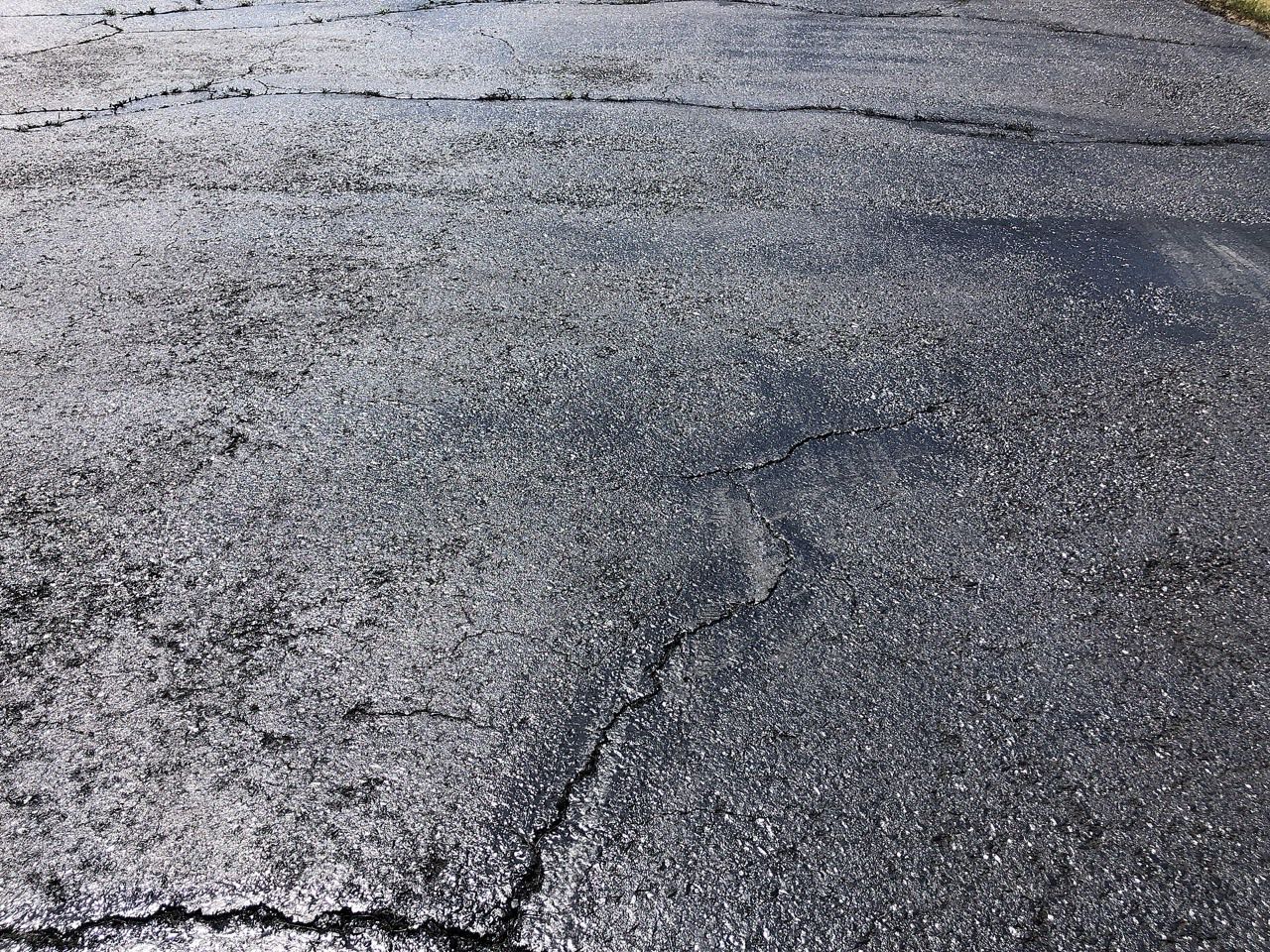
What sealcoating does NOT do: fix existing damage. Sealer goes over sound asphalt. If your driveway has potholes, deep cracks, or sub-base settling, those need separate repair before sealer makes sense. A contractor who quotes sealcoat without addressing existing damage is giving you a short-term cosmetic fix, not a real maintenance job.
How Much Union Township Driveway Sealing Costs in 2026
Most Union Township residential driveways land in these 2026 price ranges:
| Driveway Size | Typical Square Footage | 2026 Sealcoat Cost | Notes |
|---|---|---|---|
| Small single-car | 200-350 sq ft | $175-$275 | Townley and Frog Hollow typical |
| Standard 2-car | 400-500 sq ft | $225-$425 | Most Union homes |
| Long 2-car | 500-750 sq ft | $325-$550 | Battle Hill, Larchmont typical |
| Extra long or circular | 750-1,200 sq ft | $425-$800 | Putnam Manor, Stuyvesant Heights |
| Oversized (RV-capable) | 1,200-2,000+ sq ft | $700-$1,400+ | Rare in Union, more common in Elmora Hills area of Elizabeth |
These prices assume a two-coat application on asphalt in reasonably good condition. If your driveway needs crack filling before sealing, expect to add $75-$200 for a standard residential scope (5-30 linear feet of cracks). If there are oil stains or previous patch marks that need spot treatment, that is another $50-$150.
Why two coats instead of one? Union's freeze-thaw exposure eats single-coat jobs within 18 months. A double-coat application typically extends the useful life of the seal by 40-50 percent. Most serious Union contractors default to two coats; be suspicious of any quote that does not clarify how many coats are included. A "sealcoat" quote from a fly-by-night crew is often one-coat over-diluted sealer that looks good for 6 months and is gone by spring.
For detailed Union-area pricing including commercial work, see our Union Township service area page and the full 2026 NJ driveway cost guide.
The Best Time to Seal a Union Driveway
Union's sealcoat season runs late April through mid-October. Within that window, two specific sub-windows are optimal for residential work:
Sub-window 1: May through mid-June. This is our peak residential window. Daytime temps consistently in the 65-78°F range, overnight lows above 50°F, relatively low humidity weeks, and good stretches of dry weather. Our Union residential calendar typically fills out this window by mid-April, so if you want May-June, book in March.
Sub-window 2: Mid-September through early October. The second peak window. Post-Labor Day weather in Union is often perfect — warm days, cool nights, low storm risk. Homeowners who missed spring or had schedule conflicts catch up here. This window also usually fills by late August.
Why not peak summer? July and August are sealable in Union, but they come with higher thunderstorm risk. We can work around it, but homeowners sometimes find the schedule gets pushed around more in peak summer than in the shoulder windows.
Why not late October or early April? The sealer chemistry needs overnight lows consistently above 50°F to cure properly. Mid-October and early April can have isolated warm days, but the overnight lows are unreliable. A sealcoat that does not cure properly is a sealcoat that peels and fails within the first year.
Why never winter? Freezing temperatures prevent any cure at all. Winter sealcoat work in New Jersey is not legitimate — if a contractor is offering it in December through March, they are either lying about cure or using some non-asphalt coating that will fail immediately.
DIY vs Professional: The Real Math
Home improvement stores stock sealer products that let homeowners DIY driveway sealing. For a 500 sq ft Union driveway, DIY math looks like this:
- 2 buckets of 5-gallon asphalt sealer: $60-$120
- Applicator squeegee + brush: $25-$40
- Crack filler (1 tube): $10-$15
- Masking tape, dropcloth, gloves: $20-$30
- Total DIY material cost: $115-$205
- Plus 6-10 hours of your weekend
Compare that to a professional two-coat application from a real Union contractor: $250-$425, scheduled in a single day, fully cured in 24-48 hours, with a workmanship warranty.
The DIY math makes sense on paper for one scenario: a homeowner who has done this before, has the time and physical ability, and cares about cost above all else. For almost every other Union homeowner, professional sealing is the better choice because:
- Proper prep. A professional crew power-washes, cleans cracks, treats oil spots, and ensures the surface is ready for bonding. DIY typically skips power wash entirely.
- Correct dilution. Retail sealer is often over-diluted out of the bucket. Commercial-grade sealer applied at spec dilution lasts noticeably longer.
- Even coverage. Hand-squeegee DIY application typically misses 5-15 percent of surface area in uneven streaks. Commercial equipment applies evenly.
- Time and physical work. 6-10 hours of hot asphalt work under the sun is a real commitment. For most Union homeowners the $150-$250 premium for professional is worth it.
- Warranty. DIY has none. Professional sealcoat typically comes with a 12-month workmanship warranty — if the seal fails within the first year from anything other than abuse, the contractor redoes it.
How to Find a Real Union Township Sealcoating Contractor
Every spring, some fly-by-night operators show up in Union Township offering cheap sealcoat. They knock on doors, quote prices that seem too good to believe (because they are), collect checks, apply a thin coat of over-diluted sealer, and disappear. By the next spring, the driveway looks worse than it did before and the homeowner has no recourse.
Here is how to filter legitimate contractors:
1. Verify NJ contractor license. Every legitimate NJ home improvement contractor has a license number issued by the NJ Division of Consumer Affairs. You can verify any contractor's license at the NJ Consumer Affairs website. If a contractor will not give you a license number, do not hire them.
2. Insist on written scope. Every real quote is written and itemized. It specifies number of coats, surface prep included, crack fill (yes or no), and warranty terms. "We'll seal it for $200" verbally is not a scope.
3. Ask for insurance certificate. Legitimate contractors carry at least $1M in general liability and can issue a certificate of insurance (COI) to you or your property manager on request. If a contractor cannot provide a COI, they are uninsured, and any damage to your property or injury on your site lands on you.
4. Confirm material spec. Real sealer comes from established NJ suppliers (Brewer, SealMaster, GemSeal, etc.). Ask what sealer your contractor is using. If they cannot name the product, they are probably using something they picked up from a DIY store.
5. Check the truck. Legitimate sealcoating operations have a dedicated sealer truck with an agitator tank, heated spray bar, and proper equipment. A pickup with 55-gallon drums in the bed is a red flag. The truck tells you whether you are hiring a professional operation or someone who bought a bucket of sealer for the weekend.
6. Get references. Ask for 3 Union-area references from recent jobs. Real contractors have them readily; scammers have excuses.
Crack Fill: The Most Important Maintenance Step
Sealcoating gets the headlines, but crack filling is actually the single most important asphalt maintenance action — especially in a freeze-thaw climate like Union's. Here is why.
Asphalt fails from water ingress. Water seeps into any open crack, expands 9 percent when it freezes overnight, and widens the crack. Multiply that by Union's 55-65 freeze-thaw cycles per winter, and every unfilled crack becomes a bigger crack by spring. Eventually, a bigger crack becomes a pothole. Eventually, a pothole becomes a sub-base failure, which means the entire driveway needs replacement instead of repair.
Crack fill interrupts this cycle. Hot-pour rubberized crack sealant fills the crack, adheres to the asphalt, stays flexible across temperature changes, and keeps water out. A typical residential crack fill job in Union runs $75-$200 depending on linear footage (5-30 linear feet is typical for a moderately aged driveway).
Timing matters: crack fill should happen before sealcoat, and ideally in fall before winter hits. A Union homeowner who crack-fills in November and sealcoats in May has done the single most important thing for their asphalt's longevity.
Union-Specific Driveway Considerations
Union Township driveways have a few characteristics that matter:
Road salt drift. Union Township crews salt main roads heavily during winter storms. Some of that salt migrates onto private driveways via tire-splash and plow throw. Salt is corrosive to asphalt binder and accelerates oxidation. Our recommendation: rinse your driveway with a garden hose in early March once the salt-melt season ends. Free 15-minute job that extends asphalt life measurably.
Tree root interference. Many Union driveways, especially in Larchmont and older residential blocks, sit near mature trees. Root growth under the apron can lift and crack the asphalt over time. If you see cracking consistently in the same spot year after year and a tree is nearby, the issue is root pressure — not normal wear. That needs root removal and apron repair before any sealcoat makes sense.
Historic brick and stone borders. Driveways in Putnam Manor, Battle Hill, and the older parts of Union sometimes have decorative brick edges or stone borders. Professional sealcoating requires careful edge cutting around these features to avoid splash damage. This is detail work that slower-but-more-careful crews handle well and budget crews skip.
Apron transitions. Union driveways often have concrete aprons at the street transition. The joint between asphalt driveway and concrete apron is a common failure point. Sealcoat does not cross into concrete, but professional crews clean and treat the joint carefully so water does not seep between them.
The Maintenance Calendar
Here is what optimal Union driveway maintenance actually looks like over a year:
- March: Walk the driveway once snow is gone. Note cracks and damage. Photograph for before/after.
- April: Crack fill and any patching work. Has to happen before sealcoat.
- May-June: Sealcoat if it has been 30+ months since the last one (two coats standard).
- July-August: Hot weather monitoring. Avoid parking heavy jackstands or motorcycle kickstands on softened asphalt.
- September-October: Fall inspection, clean leaves and debris, spot-fill any new cracks.
- November: Pre-winter crack fill — the most important single action of the year.
- December-February: Winter protection. Use calcium chloride instead of rock salt when possible. Avoid metal shovels on cracked areas.
Frequently Asked Questions
How often should I sealcoat my Union driveway?
Every 2-3 years for a typical Union Township residential driveway. Shorter (24-30 months) if full sun all day, heavy vehicles, or UV fade within 18 months. Longer (36 months) if shaded and lightly used.
Can I sealcoat over new asphalt?
No. New asphalt needs 6-12 months to cure before the first sealcoat. Applying sealer too early prevents the asphalt binder from off-gassing properly and can trap oils that cause peeling.
What is the difference between asphalt emulsion and coal tar sealer?
Asphalt emulsion is water-based, lower-VOC, and increasingly the default in New Jersey. Coal tar is more fuel-resistant but has environmental restrictions in some areas. Both work for residential; we use whatever fits the local regulations.
How long does my driveway need to stay closed after sealcoat?
Minimum 24 hours, preferably 48 hours. First 24 hours are critical — no foot traffic, no car traffic, no pet traffic. After 48 hours, the sealer is fully cured and the driveway can resume normal use.
Will sealcoat fix my driveway cracks?
No. Sealcoat fills hairline micro-cracks but does not fix structural cracks. Cracks wider than 1/8 inch need to be filled with hot-pour rubberized crack sealant before sealcoat is applied.
How much does crack filling cost?
$75-$200 for a typical Union residential driveway with 5-30 linear feet of cracks. Hot-pour rubberized sealant, applied by a real crack-fill machine.
Can sealcoat be applied in the rain?
No. Sealcoat needs dry weather for at least 24 hours before application and 24 hours after. Rain on uncured sealer causes peeling and blistering.
What should I do if my driveway has oil stains?
Oil stains prevent sealer bonding. A professional sealcoat includes oil spot treatment — degreasing and a primer coat on the affected area — before main sealer application. DIY kits typically skip this step and the sealer peels off oil stains within weeks.
Getting Started
If you own a Union Township home and you are considering sealing your driveway, the first step is a free on-site walk-through. We will tell you honestly whether your driveway is ready for seal, whether it needs crack fill first, or whether it has gone past sealcoat-recoverable and needs overlay. And we will price it in writing within 48 hours.
Call Randy directly at Call Randy or submit a quote request to schedule. For broader Union coverage, see our Union Township service area page or explore our residential driveway sealing cost guide for county-by-county pricing across North Jersey.
Your driveway is one of the first things visitors and neighbors see. It is also one of the biggest horizontal surfaces on your property — and in Union, maintaining it is the difference between a 25-year asphalt surface and a 10-year one.
Ready to Protect Your Asphalt?
Get a free quote for professional asphalt maintenance and protection services. Our team is ready to help extend the life of your driveway or parking lot.