Quick Answer: How to Maintain an Asphalt Driveway in New Jersey
The best asphalt driveway maintenance plan in New Jersey is simple: keep water out, seal the surface before oxidation gets deep, fill cracks before winter, and fix drainage problems before they become base failure.
For most NJ homeowners, that means:
- Inspect the driveway every spring and fall.
- Fill active cracks before the first hard freeze.
- Sealcoat every 2 to 3 years, not every year.
- Keep edges supported so they do not crumble.
- Clean oil spots before they soften the asphalt binder.
- Fix low spots, ponding water, and potholes early.
- Resurface or replace when the base starts failing.
The goal is not to make asphalt last forever. The goal is to keep a good driveway out of expensive replacement territory for as long as possible.
Why NJ Asphalt Driveways Need More Maintenance
New Jersey is hard on asphalt because driveways see heat, UV exposure, road salt, freeze-thaw cycles, snow plows, and heavy rain in the same year.
In summer, UV light dries the asphalt binder and turns the surface gray. In winter, water gets into small cracks, freezes, expands, and opens those cracks wider. Salt speeds up surface wear. If the driveway has poor drainage, standing water works into the base and creates soft spots.
That is why a driveway that looks "fine" in October can show new cracks, potholes, or edge failure by March.
The 2026 Asphalt Driveway Maintenance Checklist
Use this checklist twice per year: once in spring after winter damage shows up, and once in fall before freeze-thaw weather starts.
1. Check for new cracks
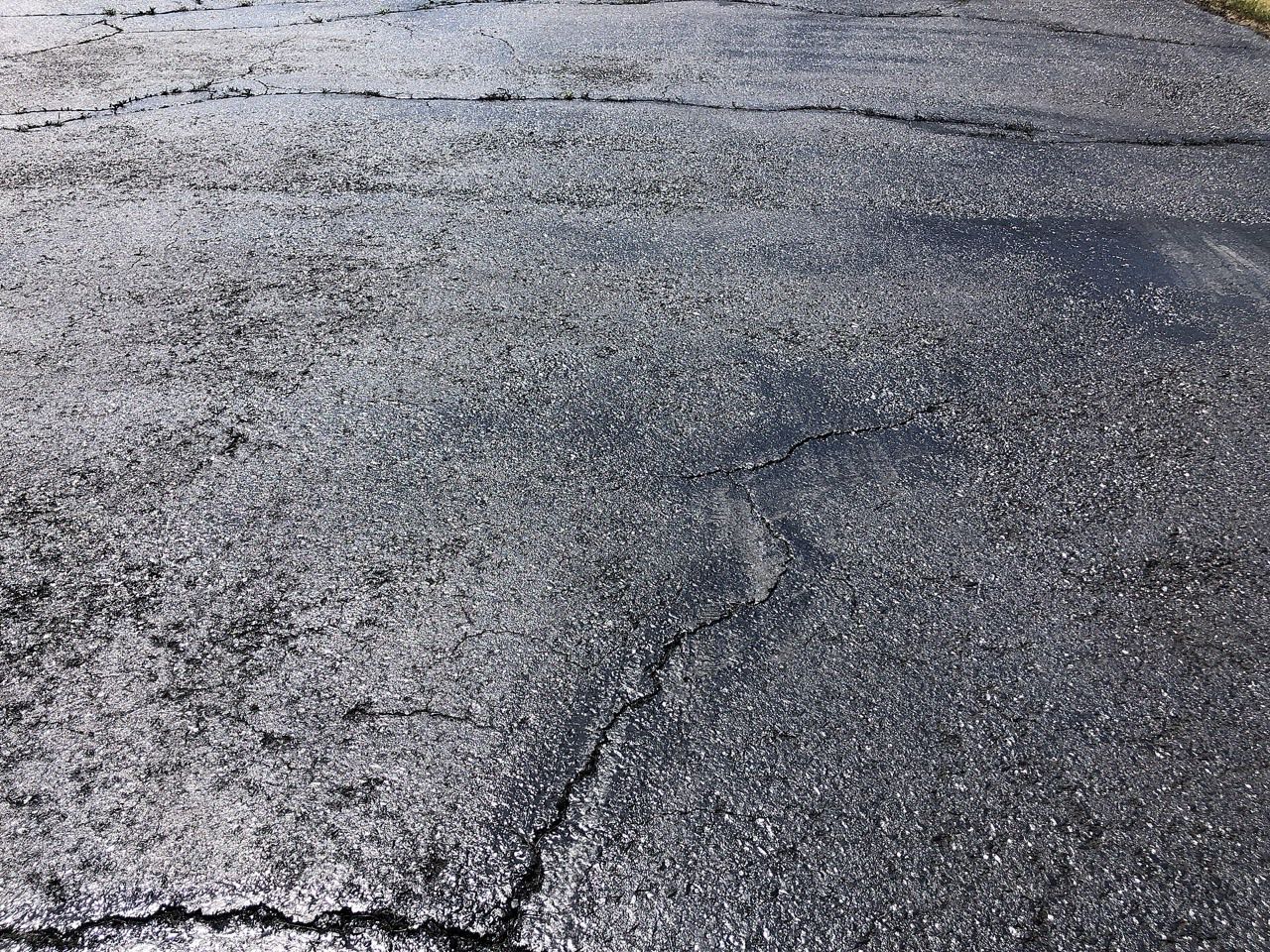
Look for hairline cracks, straight-line cracks, edge cracks, and spiderweb cracking. Hairline cracks can usually wait until the next maintenance visit. Cracks wider than 1/4 inch should be cleaned and filled before winter.
If cracks form a web pattern, that is different. Web or alligator cracking usually means the base underneath is failing. Sealcoating will make it black, but it will not fix the structure.
2. Look for standing water
Water should run off the driveway, not sit on it. After rain, check for low spots that hold water longer than a few hours. Ponding water is one of the biggest warning signs that the surface has settled or drainage is wrong.
Small shallow low spots can sometimes be patched or corrected during resurfacing. Deep dips usually point to base movement and need a closer inspection.
3. Inspect driveway edges
Edges fail when they are unsupported or repeatedly driven over. If the edge is crumbling, breaking away, or sinking, the driveway may need edge repair before sealcoating.
Good edge support matters because water enters from the side and damages the base. Adding soil support, stone shoulder support, or proper edging can slow that damage.
4. Clean oil and fluid stains
Oil, gasoline, and some automotive fluids soften asphalt. Fresh stains should be treated quickly with an asphalt-safe degreaser. Old stains may leave permanent marks, but cleaning still helps prevent the area from getting soft.
If oil has already softened the surface, that spot may need patching before sealcoat will bond properly.
5. Watch for loose stones and raveling
Raveling happens when the top layer starts losing aggregate. The surface feels rough, sandy, or brittle. Early raveling can often be slowed with sealcoating. Heavy raveling may mean the driveway is past normal maintenance and needs resurfacing.
6. Check the apron, garage edge, and sidewalk tie-ins
The areas where your driveway meets the garage, sidewalk, street, or apron take extra abuse. Water collects there, cars brake and turn there, and snow removal often scrapes those edges.
If the asphalt is lifting, sinking, or breaking at those transition points, fix that before it spreads into the main driveway.
Asphalt Driveway Maintenance Schedule by Season
Spring
Spring is inspection season. Look for winter damage, new cracks, potholes, plow scrapes, salt damage, and drainage problems.
Best spring tasks:
- Clean debris and salt residue.
- Mark new cracks.
- Patch potholes.
- Plan sealcoating once temperatures are consistently warm.
- Fix drainage before summer storms.
Spring is also when many homeowners realize a driveway needs more than blacktop sealer. If the surface has widespread cracking or dips, ask for an inspection before paying for sealcoat.
Summer
Summer is the best season for sealcoating and many repairs because warm pavement helps materials cure properly.
Best summer tasks:
- Sealcoat if the driveway is dry, clean, and structurally sound.
- Fill cracks before they widen.
- Repair small potholes.
- Clean oil stains.
- Keep heavy parked equipment off freshly sealed asphalt.
Avoid sealcoating during extreme heat, rain threats, or when overnight temperatures are too low for proper curing.
Fall
Fall is the last defensive window before winter. The priority is closing cracks and keeping water out.
Best fall tasks:
- Fill cracks before freeze-thaw weather.
- Patch potholes before snow and ice expand them.
- Clear leaves from drainage paths.
- Schedule sealcoating early enough for proper curing.
- Avoid late-season work if temperatures are no longer suitable.
If you only do one maintenance pass per year, do it in fall before water starts freezing in the cracks.
Winter
Winter is mostly about damage control. Do not ignore snow, ice, and drainage, but avoid major asphalt work unless there is a safety issue.
Best winter tasks:
- Use plastic or rubber-edged shovels where possible.
- Avoid aggressive plow scraping.
- Use ice melt carefully and follow product labels.
- Keep drains and gutters moving water away from the driveway.
- Note damage areas for spring repair.
How Often Should You Sealcoat an Asphalt Driveway?
Most New Jersey asphalt driveways should be sealcoated every 2 to 3 years.
Every year is usually too often. Over-sealcoating can create buildup, flaking, and a slick surface. Waiting 5 to 7 years is usually too long because oxidation has already weakened the top layer.
The right timing depends on:
- Sun exposure.
- Traffic level.
- Tree cover.
- Drainage.
- Previous sealcoat quality.
- Pavement age.
- Whether cracks are being filled between sealcoat cycles.
A driveway with full sun and heavy vehicle traffic may need service closer to every 2 years. A shaded driveway with light use may go closer to 3 years.
Asphalt Driveway Maintenance Cost in NJ
Actual pricing depends on driveway size, condition, access, prep work, and whether repairs are bundled with sealcoating. These are practical 2026 planning ranges for North Jersey homeowners:
| Maintenance Item | Typical NJ Range | When It Makes Sense |
|---|---|---|
| Crack filling | $1 to $3 per linear foot | Cracks wider than 1/4 inch before winter |
| Oil spot treatment | $25 to $100 per spot | Before sealcoating or patching |
| Small pothole patch | $150 to $450 | Localized damage with stable surrounding asphalt |
| Sealcoating | $0.18 to $0.35 per sq ft | Sound driveway with surface oxidation |
| Edge repair | $250 to $1,200+ | Crumbling or unsupported driveway edges |
| Driveway resurfacing | $3 to $7 per sq ft | Surface is worn but base is still solid |
| Full replacement | $5 to $12 per sq ft | Base failure, severe alligator cracking, major drainage issues |
The cheapest maintenance is not always the best value. A $300 sealcoat over a failing base wastes money. A $600 repair that prevents replacement can be a good investment.
When Sealcoating Is Enough
Sealcoating is the right maintenance step when the driveway is structurally sound but the surface is fading, drying, or showing light wear.
Good sealcoating candidates usually have:
- Gray or oxidized surface color.
- Minor hairline cracks.
- No major potholes.
- No standing water.
- No widespread alligator cracking.
- Stable edges.
- A base that still feels firm under traffic.
Sealcoating protects the surface from UV damage, water penetration, oil stains, and oxidation. It also improves appearance, but appearance is not the real value. The real value is slowing down moisture and surface breakdown.
When Crack Filling Is More Important Than Sealcoating
If your driveway has open cracks, fill them before sealcoating.
Sealcoat is not a crack filler. It is a protective coating. If water can still get into a crack after sealcoating, the freeze-thaw damage continues underneath the black surface.
Crack filling matters most before winter because even small openings can widen quickly when water freezes. A single untreated crack can become a pothole or a failed section if water reaches the base.
When Maintenance Is No Longer Enough
There is a point where maintenance becomes cosmetic. If the driveway has structural failure, the honest answer is repair, overlay, resurfacing, or replacement.
Warning signs maintenance may not be enough:
- Alligator cracking across large sections.
- Potholes that keep coming back.
- Soft spots or sinking areas.
- Standing water after rain.
- Multiple old overlay layers.
- Crumbling edges across long stretches.
- Cracks wider than 1 inch.
- Asphalt that breaks apart under foot pressure.
In those cases, sealcoating may make the driveway look better for a short time, but it will not stop the failure.
Maintenance vs Resurfacing vs Replacement
The decision comes down to the condition of the surface and the base.
Maintain
Choose maintenance when the surface is mostly intact. This includes sealcoating, crack filling, spot patching, cleaning, and edge support.
Resurface
Choose resurfacing or overlay when the top layer is worn but the base is still solid. A new layer can restore the surface at a lower cost than replacement. See our driveway resurfacing cost guide and asphalt overlay cost guide for pricing.
Replace
Choose replacement when the base is failing. If the asphalt is moving, sinking, pumping water, or cracking in a web pattern, a new surface over the old base will not last.
How Long Does Asphalt Driveway Maintenance Add to Lifespan?
A properly installed asphalt driveway in New Jersey can last 15 to 25 years with the right maintenance. Without maintenance, many driveways start showing serious failure much earlier.
Regular sealcoating and crack filling can add years of usable life because they slow the two biggest causes of failure: oxidation and water intrusion.
Maintenance cannot reverse structural failure, but it can delay it when started early enough.
NJ Homeowner Checklist Before Calling a Contractor
Before asking for a quote, walk the driveway and note:
- Approximate driveway size.
- Number and width of cracks.
- Any potholes.
- Areas with standing water.
- Oil stains.
- Edge damage.
- Age of driveway if known.
- Last sealcoat date.
- Whether the driveway has been overlaid before.
Take photos from the street, garage, sides, and close-ups of problem areas. This helps a contractor give a more accurate first read before visiting.
What Randy Looks for During a Driveway Maintenance Estimate
For a normal driveway maintenance estimate, we look at more than surface color.
We check:
- Whether the driveway is a sealcoat candidate.
- Whether cracks need filling first.
- Whether potholes or soft spots need patching.
- Whether drainage is causing the damage.
- Whether edges need support or repair.
- Whether resurfacing would be a better long-term answer.
- Whether replacement is the more honest recommendation.
That last point matters. Not every driveway should be sealcoated. If maintenance will not hold, we will say that before you spend money on the wrong fix.
Internal Links for Your Next Step
If you already know what problem you are dealing with, these guides go deeper:
- Driveway sealing cost for sealcoating pricing.
- Asphalt crack filling cost for crack repair planning.
- Pothole repair cost in NJ for localized holes.
- Driveway resurfacing cost in NJ for overlay and resurfacing.
- Asphalt overlay cost for overlay vs replacement decisions.
- Asphalt repair vs replace if the driveway may be past maintenance.
Frequently Asked Questions
How often should an asphalt driveway be maintained?
Inspect it twice per year and plan sealcoating every 2 to 3 years if the surface is structurally sound. Cracks should be filled as needed, especially before winter. Potholes and drainage issues should be handled quickly because they usually get worse, not better.
What is the most important asphalt driveway maintenance task?
Keeping water out is the most important task. That means filling cracks, correcting drainage, repairing low spots, and keeping edges supported. Water entering the base causes much more expensive damage than surface fading.
Is sealcoating the same as asphalt maintenance?
No. Sealcoating is one part of asphalt maintenance. A full maintenance plan can include cleaning, crack filling, pothole patching, drainage correction, edge repair, oil spot treatment, and resurfacing when the top layer is worn.
Can I maintain my driveway myself?
Homeowners can clean debris, treat small oil spots, and monitor cracks. DIY crack filler can work for very small areas, but professional hot-applied crack filling and commercial-grade sealcoat usually last longer. If the driveway has potholes, drainage problems, or structural cracking, get a contractor inspection.
What month is best for driveway maintenance in NJ?
Late spring through early fall is best for most work. Sealcoating needs warm, dry weather to cure correctly. Fall is the key deadline for crack filling because open cracks should be sealed before freeze-thaw cycles begin.
How do I know if my driveway needs resurfacing instead of maintenance?
If the driveway has widespread cracking, rough raveling, low spots, or repeated repairs, resurfacing may be a better investment than another sealcoat. If the base is still solid, resurfacing can add a new asphalt layer. If the base is failing, replacement is usually the better answer.
How long should I stay off a freshly sealcoated driveway?
Most sealcoated driveways need at least 24 to 48 hours before vehicle traffic, depending on weather, humidity, shade, and product used. Foot traffic may be allowed sooner, but vehicles should wait until the surface is fully cured.
Does sealcoating fix cracks?
No. Sealcoating protects the surface, but cracks need to be cleaned and filled separately. If a contractor says sealcoat alone will fix open cracks, be careful. Crack filling should happen before sealcoat on any driveway with visible openings.
Get a Maintenance Estimate
If your driveway is fading, cracking, holding water, or starting to break at the edges, Randy Seal Coating & Striping can inspect it and tell you whether maintenance is enough or whether repair/resurfacing makes more sense.
Call Call Randy or request a free estimate. We serve homeowners throughout Union County, Essex County, Passaic County, Bergen County, Morris County, Middlesex County, and nearby North Jersey communities.
Ready to Protect Your Asphalt?
Get a free quote for professional asphalt maintenance and protection services. Our team is ready to help extend the life of your driveway or parking lot.