Quick Answer: How Often Should You Sealcoat a Driveway in NJ?
Most asphalt driveways in New Jersey should be sealcoated every 2 to 3 years.
That is the number that matters. Not every year. Not once a decade. Every two to three years for the typical North Jersey driveway.
The exact timing depends on sun exposure, traffic, and the last time the surface was sealed. Some driveways need it closer to every 2 years. Others can stretch to 3.
Here is the short version by situation:
- Brand-new asphalt driveway: Wait 6 to 12 months, then seal. Fresh asphalt needs to cure first.
- Standard residential driveway: Reseal every 2 to 3 years.
- Full-sun or heavy-traffic driveway: Reseal every 2 years.
- Shaded, light-use driveway: Every 3 years is usually fine.
- Driveway you cannot remember sealing: It is overdue. Seal it this season.
Late May is the heart of NJ sealcoating season. If your driveway is on the 2-to-3-year cycle and due, now is the time to act before the summer heat and fall rush.
This guide explains why that schedule exists, how to tell if you are overdue, and what waiting too long actually costs.
Why 2 to 3 Years Is the Right Schedule for New Jersey
Sealcoat is not paint. It is a protective layer over the asphalt binder that holds your driveway together.
That binder is petroleum-based. Sun, water, and temperature swings slowly break it down. Sealcoat slows that breakdown. But sealcoat itself wears away over time.
In New Jersey, three forces age a driveway faster than the national average:
- Freeze-thaw cycles: NJ winters cross the freezing point again and again. Water seeps into tiny gaps, freezes, expands, and widens them. The Office of the New Jersey State Climatologist tracks these repeated swings across 32°F every winter (Rutgers NJ State Climate).
- UV and heat: Summer sun oxidizes the surface and fades it from black to gray. Gray asphalt is a warning sign, not a cosmetic one.
- Road salt and moisture: Winter de-icing chemicals and standing water attack the surface from above and below.
A fresh sealcoat resists all three. But the protection is not permanent. By year two or three, the layer has thinned enough that the asphalt underneath starts taking the damage again.
That is why the cycle repeats. You are not resealing because the last job failed. You are resealing because the protection did its job and wore out on schedule.
The Payoff: Why Sealcoating on Schedule Saves Real Money
Sealcoating is cheap insurance against an expensive repair.
The math is well established in pavement engineering. The Federal Highway Administration's pavement preservation guidance shows that every $1 spent on timely surface preservation can offset $6 to $10 in future repair and reconstruction (FHWA Pavement Preservation). The same logic that protects highways protects your driveway.
The reason is simple. A small, regular expense prevents a large, sudden one.
- A sealcoat costs a few hundred dollars.
- A full driveway replacement runs $5,000 to $12,000 for a typical 1,000 sq ft driveway in NJ.
- Crack filling, pothole repair, and resurfacing fall in between.
Well-built, well-maintained asphalt can last 15 to 30 years, according to the National Asphalt Pavement Association (NAPA). Skipping sealcoat cuts that lifespan in half. The difference between a 15-year driveway and a 30-year driveway is mostly maintenance.
Asphalt is also the most recycled material in America, with over 80 million tons of reclaimed asphalt pavement reused each year (NAPA). Maintaining what you have is both cheaper and greener than replacing it.
How to Tell Your Driveway Is Due (The 2-Minute Test)
You do not need a contractor to know when your driveway is overdue. Walk outside and look.
Run this quick check:
- Look at the color. Deep black means recent seal. Faded gray or tan means the seal is gone.
- Pour a cup of water on it. If it soaks in fast, the surface is porous and unprotected. If it beads, the seal is still working.
- Look for hairline cracks. Spider-web or small surface cracks mean water is getting in.
- Check the texture. If you can see loose stones or a rough, gritty surface, the binder is wearing away.
- Rub the surface with your hand. Black residue on your palm means oxidation has started.
If two or more of these point to trouble, your driveway is due.
These are the same signs that searchers ask about constantly. For a deeper look at surface failure, see our guide on the warning signs your sealcoat is failing. If the cracks are already wide, you may be closer to needing resurfacing than a simple reseal.
What Shortens the Sealcoating Cycle
Some driveways burn through their seal faster. If any of these apply to you, lean toward the 2-year end of the schedule:
- Full southern sun with no tree cover all day
- Heavy daily traffic, multiple vehicles, or a work truck
- Steep slope where water runs and pools
- Poor drainage or a low spot that holds puddles
- Oil and gas drips that soften the surface
- Skipped crack filling, which lets water undermine the base
What Extends the Sealcoating Cycle
Other driveways hold their seal longer. These factors let you safely stretch toward 3 years:
- Partial shade that limits UV exposure
- Light use, such as a single car or weekend driving
- Good drainage with no standing water
- A quality previous sealcoat applied with proper prep
- Prompt crack repair done before each winter
The takeaway is that the 2-to-3-year range is a guideline, not a rule. Read your own driveway and adjust.
Can You Sealcoat a Driveway Too Often?
Yes. Sealing every single year is usually a waste of money and can cause problems.
Sealcoat needs time to wear to the right thickness before the next coat goes on. Pile on fresh layers too soon and the buildup can crack, peel, or flake. Thick, over-sealed driveways look shiny at first and fail in sheets later.
The sweet spot is letting the prior coat thin out, then resealing. For nearly every NJ driveway, that lands at 2 to 3 years. Annual sealing is overkill except in rare, very high-traffic commercial cases.
DIY vs Professional Sealcoating: What Actually Differs
The big-box store sells sealer in 5-gallon buckets. So why hire a professional? The honest answer is in the prep and the product.
Here is the side-by-side:
| Factor | DIY Bucket Sealer | Professional Sealcoat |
|---|---|---|
| Material | Diluted big-box sealer | Commercial-grade emulsion, sand-fortified |
| Surface prep | Sweep and rinse | Power clean, oil-spot priming, crack filling |
| Coats | Usually one thin coat | Two even coats at correct thickness |
| Crack repair | Rarely included | Hot or cold crack fill before sealing |
| Typical lifespan | 1 to 2 years | 2 to 3 years |
| Even coverage | Hard by hand | Spray or squeegee applied evenly |
The product matters too. Many DIY buckets are coal-tar based. Research from the U.S. Geological Survey found that coal-tar-based sealcoat carries PAH levels roughly 1,000 times higher than asphalt-based sealcoat, which is why many states and towns now restrict it (USGS coal-tar sealcoat research). Professional crews increasingly use asphalt-emulsion products that perform well and avoid that issue.
DIY can work on a small, light-use driveway if you fill cracks first and apply two coats. But on most NJ driveways, the professional job lasts longer per dollar because the prep is the part homeowners skip.
If you want pricing detail, our sealcoating cost per square foot guide breaks down what a fair NJ quote looks like.
What a Professional Sealcoat Includes
A real sealcoat is a process, not a single step. When you hire Randy Seal Coating & Striping, here is the order of work:
- Clean the surface. Blow off debris, then power clean dirt and loose stone.
- Treat oil spots. Prime grease and oil stains so the sealer bonds.
- Fill the cracks. Apply hot or cold crack filler to stop water intrusion.
- Edge and trim. Cut clean lines along garages, walks, and grass.
- Apply two coats. Lay even coats at the correct thickness, not one thin pass.
- Cure and protect. Keep traffic off for 24 to 48 hours so the seal sets.
That sequence is why a professional driveway sealing job outlasts a quick weekend coat. The prep does the heavy lifting.
The Best Time of Year to Sealcoat in NJ
Timing within the year matters as much as the multi-year schedule.
Sealcoat needs warm, dry weather to cure. The ideal NJ window runs from late spring through early fall, when daytime temperatures hold above 50°F and no rain is expected for 24 hours.
- Spring (May to June): Excellent. Mild temperatures and long dry stretches. This is peak season.
- Summer (July to August): Good, but very hot afternoons can flash-dry the seal. Early starts help.
- Early fall (September to mid-October): Strong, with stable temperatures.
- Late fall and winter: Risky to impossible. Cold and damp prevent proper curing.
Late May, right now, sits in the best part of that range. For the full seasonal breakdown, read our guide on the best time to sealcoat a driveway in NJ. If you are reading this in autumn, check when it is too late to seal a driveway before booking.
What It Costs to Sealcoat a Driveway in NJ
Cost is the other half of the "how often" question. Knowing the price makes the 2-to-3-year cycle easy to budget.
Nationally, driveway sealing runs about $0.15 to $0.25 per square foot, or roughly $250 to $700 for a standard driveway (HomeGuide). New Jersey pricing tends to sit at the upper end because of higher labor costs in the region.
A few reference points for NJ:
- Small driveway (400 sq ft): about $150 to $300
- Standard driveway (600 sq ft): about $200 to $450
- Large driveway (1,000 sq ft): about $300 to $650
Material prices also move with oil markets. The Bureau of Labor Statistics Producer Price Index for asphalt paving mixtures rose roughly 5 percent year over year through 2025 (BLS PPI). Sealing on schedule locks in protection before prices climb further.
Spread across a 2-to-3-year cycle, a professional sealcoat costs about the price of a tank of gas per month. Compared to a four-figure replacement, the value is hard to argue with.
The Real Cost of Waiting Too Long
Skipping a sealcoat cycle does not save money. It defers a bigger bill.
Here is what happens when you stretch a driveway past its limit:
- Year 1 overdue: Surface fades and goes porous. Still fixable with a reseal.
- Year 2 overdue: Hairline cracks form. Now you need crack filling plus seal.
- Year 3 overdue: Cracks widen, water reaches the base, and potholes start. Repairs get expensive.
- Year 4 plus: Base failure. You are now looking at resurfacing or full replacement.
Once water reaches the gravel base, sealcoat can no longer save the driveway. The damage is structural. That is the line between a few hundred dollars and several thousand.
This is the whole argument for a schedule. A reseal every 2 to 3 years keeps you in the cheap zone permanently. For more on how small cracks become potholes, see why potholes form on NJ driveways.
A Simple Maintenance Schedule You Can Follow
Put the whole thing on autopilot with this NJ-tuned schedule:
- Every spring: Walk the driveway and run the 2-minute test above.
- Every spring or fall: Fill any new cracks before they widen.
- Every 2 to 3 years: Sealcoat the full driveway.
- After year 15: Have the surface inspected for resurfacing needs.
Pair this with our broader asphalt driveway maintenance checklist and you will rarely face a surprise repair.
Randy Seal Coating & Striping has served Union and Essex County homeowners since 2009, and the driveways that last longest all share one trait: they get sealed on time, every time.
Frequently Asked Questions
How long does driveway sealer last in NJ?
A professional sealcoat lasts about 2 to 3 years in New Jersey. Heavy sun and traffic push it toward 2 years. Shade and light use can stretch it toward 3. DIY bucket sealer usually lasts only 1 to 2 years because of thinner coats and less prep.
How do I know if my driveway needs to be sealed?
Look at the color and texture. Faded gray asphalt, a porous surface that soaks up water, loose stones, and hairline cracks all mean it is due. If you cannot remember the last time it was sealed, it is overdue.
What is the average cost to seal a driveway?
Expect about $0.15 to $0.25 per square foot, or roughly $250 to $700 for a standard driveway. In New Jersey, a 600 sq ft driveway typically runs $200 to $450 for a professional job, depending on prep and crack repair.
Can you sealcoat a driveway too often?
Yes. Sealing every year usually wastes money and can cause buildup that cracks or peels. Let the prior coat wear down first, then reseal. Every 2 to 3 years is the right cadence for nearly all NJ driveways.
Is October too late to seal a driveway in NJ?
Early October can still work if temperatures stay above 50°F and the surface is dry. By late October the weather usually turns too cold and damp for a proper cure. When in doubt, wait for spring rather than risk a seal that never sets.
Is sealcoating worth it, or should I just replace the driveway later?
Sealcoating is worth it. Pavement preservation returns about $6 to $10 for every $1 spent by delaying major repairs. A few hundred dollars every few years protects a surface worth thousands to replace.
How soon can I sealcoat a brand-new asphalt driveway?
Wait 6 to 12 months. Fresh asphalt needs time to cure and release its oils before it can accept and hold a sealcoat. Sealing too early traps those oils and weakens the bond.
Does sealcoating fix cracks in a driveway?
No. Sealcoat protects the surface but does not repair cracks. Cracks must be filled first, then sealed over. Skipping crack repair lets water reach the base and undo the whole job.
Ready to Sealcoat Your NJ Driveway This Season?
If your driveway is on the 2-to-3-year cycle and due, late spring is the best time to act. Randy Seal Coating & Striping provides professional sealcoating and crack repair across Union and Essex County, NJ.
Call Call Randy or request a free estimate for a straight answer on whether your driveway needs sealing now.
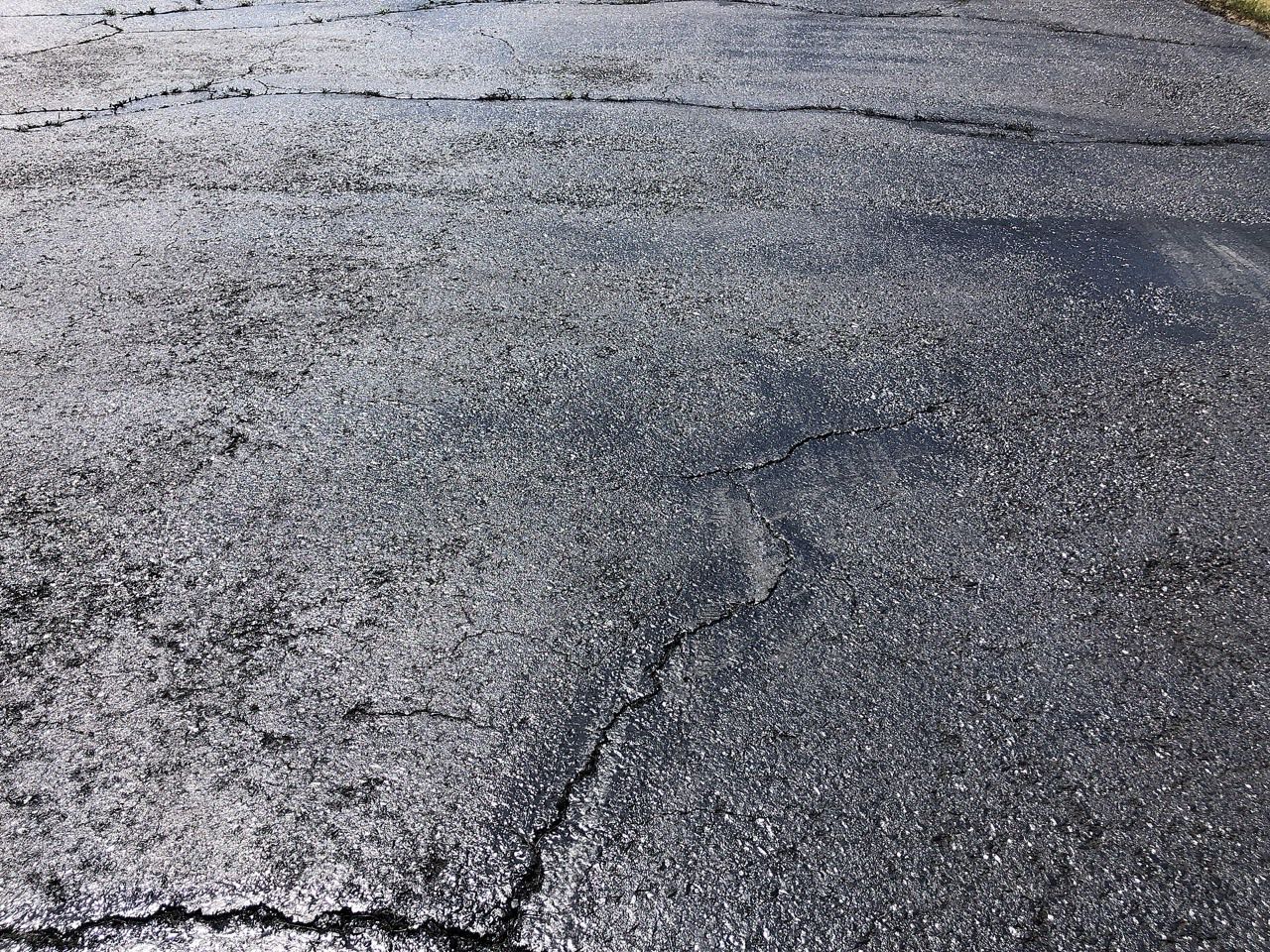
Photo: "An asphalt driveway with a fresh sealcoat," Ewing Township, NJ, by Famartin via Wikimedia Commons, licensed under CC BY-SA 4.0.
Ready to Protect Your Asphalt?
Get a free quote for professional asphalt maintenance and protection services. Our team is ready to help extend the life of your driveway or parking lot.