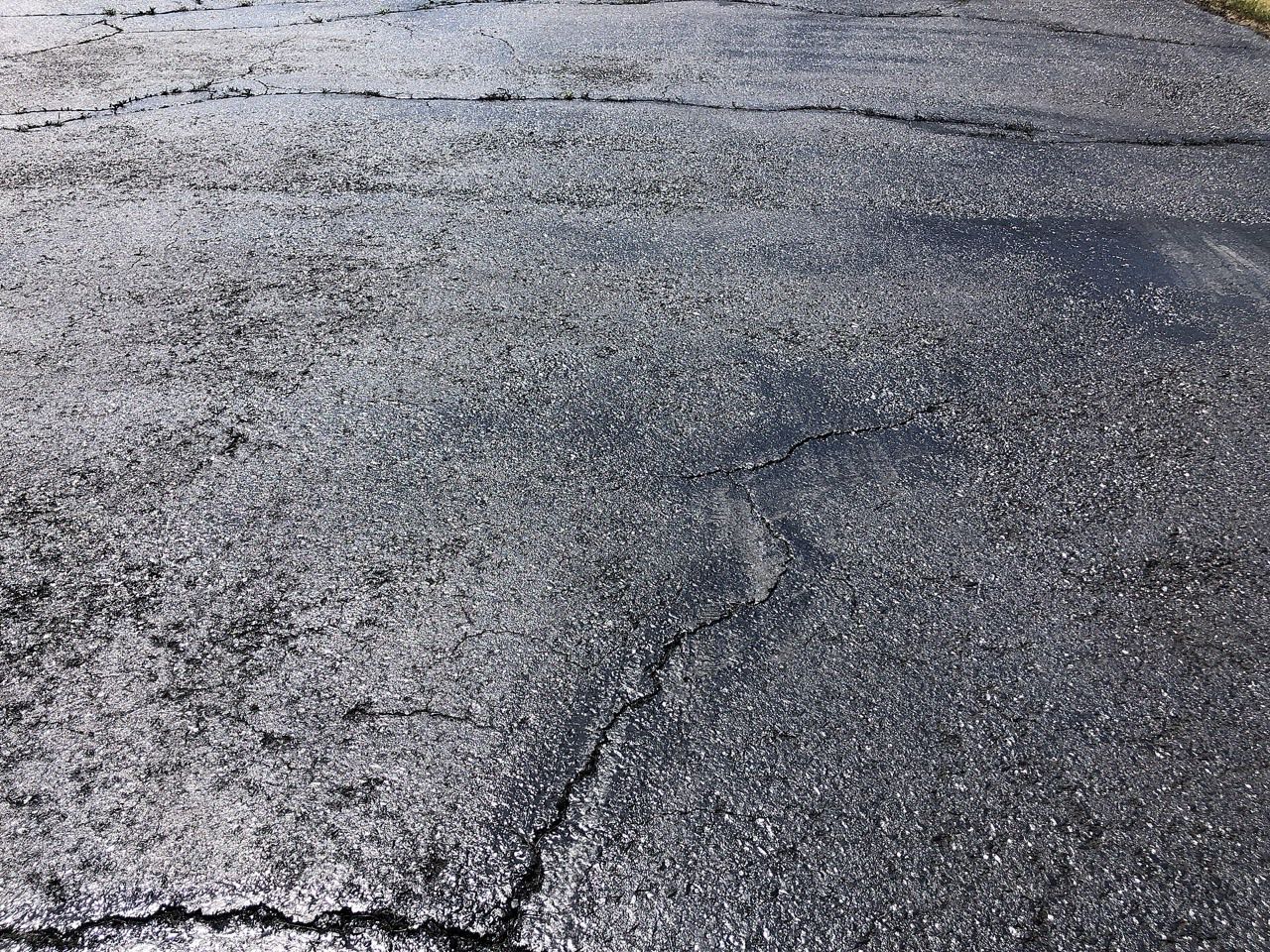
Sealcoating Cost Per Square Foot in 2026: NJ Driveway & Parking Lot Pricing Guide
Quick Answer: Sealcoating costs $0.15 to $0.40 per square foot for most New Jersey properties. A typical residential driveway runs $150 to $500, while commercial parking lots range from $1,000 to $5,000+ depending on size and condition. NJ prices run about 15-20% above national averages due to higher labor costs and the heavy freeze-thaw wear our climate puts on asphalt.
Whether you are a homeowner looking at your driveway or a property manager getting bids for a parking lot, the first question is always the same: how much does sealcoating cost?
The answer depends on a few things — square footage, surface condition, number of coats, and what kind of prep work the asphalt needs before we can apply sealer. But sealcoating is one of the most cost-effective things you can do to protect your asphalt. A $300 sealcoat job today can prevent a $5,000 repaving job three years from now.
We have been sealcoating driveways and parking lots across six New Jersey counties for years. This guide gives you the real numbers we see on jobs in Union County, Essex County, Passaic County, Bergen County, Middlesex County, and Morris County — not generic national averages that do not reflect what you will actually pay in the Garden State.
Sealcoating Cost Per Square Foot Breakdown
The sealcoating price per square foot varies depending on whether the job is residential or commercial, how much prep work is needed, and whether you are getting one coat or two. Here is what you can expect in New Jersey:
| Property Type | Cost Per Sq Ft | Typical Total Cost | Notes |
|---|---|---|---|
| Residential driveway (good condition) | $0.15-$0.25 | $150-$500 | Minimal prep, 1-2 coats |
| Residential driveway (needs repair first) | $0.25-$0.40 | $300-$800 | Includes crack filling and patching |
| Small commercial lot (10-30 spaces) | $0.14-$0.22 | $1,000-$2,500 | Economy of scale lowers per-sqft cost |
| Medium commercial lot (30-75 spaces) | $0.12-$0.20 | $2,000-$4,000 | Bulk material pricing applies |
| Large commercial lot (75-200+ spaces) | $0.10-$0.18 | $3,500-$8,000+ | Best per-sqft rates, most prep work |
NJ pricing. Rates reflect 2026 material and labor costs across Union, Essex, Passaic, Bergen, Middlesex, and Morris counties.
A few things to notice in these numbers. First, the per-square-foot cost goes down as the job gets bigger. That is because a large portion of the cost is mobilization — getting the crew and equipment to your property, setting up, and cleaning up. Whether we are sealing 500 square feet or 50,000 square feet, that setup cost is roughly the same. Second, driveways in poor condition cost more because they need crack filling services and patching before the sealer goes down. Sealcoat does not fix existing damage — it prevents future damage.
Residential Driveway Sealcoating Cost by Size
Most homeowners want to know what their specific driveway will cost. Here is a breakdown by common driveway sizes we see across New Jersey neighborhoods:
| Driveway Type | Approximate Size | Cost Range (1 Coat) | Cost Range (2 Coats) |
|---|---|---|---|
| Single-car driveway | 200-400 sq ft | $80-$120 | $130-$180 |
| Standard two-car driveway | 400-600 sq ft | $100-$180 | $160-$280 |
| Wide two-car driveway | 600-800 sq ft | $150-$240 | $230-$360 |
| Triple-wide driveway | 800-1,000 sq ft | $200-$300 | $300-$420 |
| Large or extended driveway | 1,000-1,500 sq ft | $250-$400 | $380-$560 |
| Estate or circular driveway | 1,500-2,500+ sq ft | $375-$625 | $525-$900 |
Assumes driveway in fair to good condition with minimal crack filling needed. Add $100-$300 for driveways needing significant prep work.
We always recommend two coats for driveways in New Jersey. The freeze-thaw cycles we get from November through March are brutal on single-coat applications. Two coats gives you a thicker protective layer that lasts 3 to 4 years instead of 1 to 2 years. The extra $50 to $150 for the second coat saves you from having to reseal a year early.
If your driveway has cracks, potholes, or areas where the asphalt is starting to crumble, those need to be fixed before sealcoating. Check our asphalt driveway repair cost guide for what those repairs typically run.
Commercial Parking Lot Sealcoating Cost
Parking lot sealcoating follows different economics than residential work. The lots are bigger, the material is bought in bulk, and the job usually includes line striping after the sealer cures. Here is what commercial property managers and business owners should budget:
| Lot Size | Number of Spaces | Approximate Sq Ft | Sealcoating Cost | With Striping |
|---|---|---|---|---|
| Small retail/office | 10-20 spaces | 4,000-8,000 | $800-$1,600 | $1,200-$2,200 |
| Medium commercial | 20-50 spaces | 8,000-20,000 | $1,400-$3,500 | $2,000-$4,500 |
| Large (supermarket, plaza) | 50-100 spaces | 20,000-40,000 | $3,000-$6,000 | $4,000-$7,500 |
| Extra large (mall, hospital) | 100-200 spaces | 40,000-80,000 | $5,000-$10,000 | $6,500-$12,000 |
| Mega lot (campus, stadium) | 200+ spaces | 80,000+ | $8,000+ | $10,000+ |
Commercial pricing assumes two coats of commercial-grade sealer. Striping costs are for re-striping existing layout. See our parking lot striping cost guide for detailed line striping pricing.
For commercial properties, we strongly recommend budgeting for sealcoating and striping together. The sealer covers the old parking lines, so you will need re-striping anyway. Bundling these services saves you the cost of a second mobilization — typically $250 to $350 in New Jersey.
Property managers with multi-year maintenance contracts can often lock in better rates. If you manage multiple properties, ask about volume pricing when you get your free sealcoating estimate.
What Affects Sealcoating Cost
Not every sealcoating job costs the same. These are the factors that move your price up or down:
Surface Condition
This is the single biggest cost variable. A driveway or lot in good condition — minor surface wear, few cracks, no potholes — is straightforward to seal. A surface with alligator cracking, oil stains, potholes, or crumbling edges needs repair work before the sealer can go down.
Sealcoat is a protective coating, not a structural repair. If we put sealer over damaged asphalt, it will crack right through within weeks. The repair work has to happen first, and that adds cost:
| Prep Work Needed | Additional Cost |
|---|---|
| Crack filling (hot rubberized) | $0.50-$2.00 per linear foot |
| Pothole patching | $50-$200 per pothole |
| Oil spot treatment/priming | $25-$75 per spot |
| Power washing/cleaning | $0.05-$0.10 per sq ft |
| Edge repair | $3-$8 per linear foot |
If your asphalt needs more than cosmetic crack filling, you may want to consider asphalt repair as a separate project before scheduling the sealcoat.
Square Footage
Bigger jobs cost more in total but less per square foot. A 400-square-foot driveway might run $0.25 per square foot, while a 40,000-square-foot parking lot might come in at $0.12 per square foot. The sealer material itself is relatively affordable in bulk — it is the labor, setup, and equipment that create the cost floor.
Number of Coats
One coat provides basic protection. Two coats provides a thicker barrier that lasts significantly longer. Here is the trade-off:
- One coat: Lower upfront cost, but only lasts 1-2 years in NJ climate. Good for budget-conscious residential jobs on driveways in excellent condition.
- Two coats: 40-60% more material cost, but lasts 3-4 years. Better long-term value. Standard recommendation for all NJ properties.
For commercial lots, two coats is essentially mandatory. The traffic volume and NJ weather will wear through a single coat fast.
Prep Work Required
Beyond surface repairs, every sealcoating job requires some baseline preparation:
- Cleaning: Dirt, debris, and loose material must be removed. Power washing runs $0.05-$0.10 per square foot.
- Crack filling: Hot rubberized crack filler is applied to all cracks wider than a quarter inch.
- Oil spot treatment: Oil and fuel stains prevent sealer from bonding. They need to be treated with a special primer.
- Edging: The sealer needs to be cut cleanly along edges, expansion joints, and transitions.
A well-maintained surface that has been sealed before might need 30 minutes of prep. A neglected lot might need a full day of repair work before the sealer crew can start.
Material Type
Two main sealcoat materials are used in New Jersey:
| Material | Cost Per Sq Ft | Durability | Notes |
|---|---|---|---|
| Asphalt emulsion | $0.12-$0.30 | 2-3 years | Most common in NJ, environmentally safer |
| Coal tar | $0.15-$0.35 | 3-5 years | More durable but restricted in some NJ municipalities |
Important NJ note: Coal tar sealants are banned or restricted in several New Jersey municipalities due to environmental concerns. The NJ Department of Environmental Protection has flagged coal tar as a significant source of polycyclic aromatic hydrocarbons (PAHs) in waterways. Before requesting coal tar, check whether your municipality allows it. We use high-quality asphalt emulsion sealer that meets or exceeds coal tar performance in most applications without the environmental restrictions.
Accessibility
Driveways and lots that are easy to access with equipment cost less. Factors that increase cost:
- Long or narrow driveways where the spray rig cannot reach
- Lots with heavy landscaping or obstacles requiring hand application
- Multi-level parking structures (typically hand-applied, much more labor-intensive)
- Properties requiring traffic management during application
NJ Labor Rates
New Jersey has some of the highest labor costs for paving and sealcoating in the country. According to NJ Department of Labor data, paving and sealcoating crew rates run 15-20% above the national average. This is factored into all the pricing in this guide. If you are comparing our numbers to national cost guides, expect to add 15-20% to those figures for an accurate NJ estimate.
Residential vs Commercial Sealcoating: Key Differences
Homeowners and property managers are buying the same basic service — a protective coating on asphalt — but the jobs are different in several important ways:
| Factor | Residential Driveway | Commercial Parking Lot |
|---|---|---|
| Typical size | 400-1,500 sq ft | 8,000-80,000+ sq ft |
| Cost per sq ft | $0.15-$0.40 | $0.10-$0.22 |
| Number of coats | 1-2 (2 recommended) | 2 (standard) |
| Material | Consumer or commercial grade | Commercial/industrial grade |
| Prep work | Light cleaning, minor cracks | Power washing, crack filling, oil treatment, patching |
| Cure time | 24-48 hours | 24-48 hours (phased for business continuity) |
| Striping needed after | No | Yes — budget an additional 15-25% for re-striping |
| Scheduling | Flexible | Often nights/weekends to minimize business disruption |
| Frequency | Every 2-3 years | Every 2-3 years (high-traffic areas may need annual touch-ups) |
For commercial properties, the biggest additional consideration is business continuity. You cannot close a supermarket parking lot for two days during peak hours. That is why commercial sealcoating is often done in phases — half the lot at a time — or scheduled for nights and weekends when traffic is lowest. Phased application may add 10-15% to the project cost due to additional mobilizations.
When Does Your Asphalt Need Sealcoating?
Sealcoating is not a one-time job. It is a maintenance cycle. Here are the signs your asphalt is due:
Visual Signs
- Color fading: Fresh asphalt is deep black. When it turns gray, the binder is oxidizing and the surface is losing its protective oils. This is the ideal time to seal — before damage starts.
- Hairline cracks: Small surface cracks mean water is starting to penetrate. Seal now before they widen.
- Rough texture: When the surface feels gritty or rough instead of smooth, the fine aggregate is wearing away.
- Water not beading: On properly sealed asphalt, water beads and runs off. If water soaks in and darkens the surface, the previous sealcoat has worn through.
Timing Guidelines
| Situation | When to Sealcoat |
|---|---|
| New asphalt (just paved) | Wait 6-12 months for oils to cure, then seal |
| Previously sealed (good condition) | Every 2-3 years |
| Previously sealed (high-traffic area) | Every 1-2 years |
| Never sealed, aging asphalt | As soon as possible — every season of delay accelerates damage |
| After major repairs | 30-90 days after patching or resurfacing |
NJ Seasonal Window
In New Jersey, the sealcoating season runs from late April through October. The sealer needs air and ground temperatures above 50 degrees Fahrenheit and dry conditions for at least 24 hours after application. Our spring and fall are the sweet spots — warm enough for proper curing but not so hot that the sealer dries too fast.
Pro tip: Spring is the best time to sealcoat in NJ. You are sealing before the summer sun and heat can further damage exposed asphalt, and you are giving the coating a full season to cure before winter hits. Property managers getting quotes in March and April are ahead of the game.
Sealcoating vs Asphalt Overlay vs Full Replacement
Sealcoating is not always the right answer. Here is how to know which service your asphalt actually needs:
| Service | Cost Per Sq Ft | When It Makes Sense | Lifespan Added |
|---|---|---|---|
| Sealcoating | $0.15-$0.40 | Surface fading, minor cracks, preventive maintenance | 2-4 years before next seal needed |
| Crack filling + sealcoating | $0.30-$0.60 | Moderate cracking but sound base | 3-5 years |
| Asphalt overlay (resurfacing) | $3.00-$7.00 | Widespread surface damage, alligator cracking, but base is intact | 10-15 years |
| Full removal and replacement | $7.00-$15.00 | Base failure, deep potholes, drainage problems, asphalt over 20 years old | 20-30 years |
The decision rule is simple: If the base underneath the asphalt is still solid, sealcoating or an overlay can extend the life. If the base has failed — you see large sunken areas, standing water, or the asphalt is moving when you drive over it — no amount of sealcoat will fix the problem. You need asphalt repair or full replacement.
Sealcoating is preventive maintenance, like changing the oil in your car. It is cheap relative to the asset it protects. A $300 sealcoat on a driveway worth $8,000 extends its life by years. A $3,000 sealcoat on a parking lot worth $150,000 is a no-brainer.
How to Get the Best Value on Sealcoating in NJ
Time It Right
Schedule sealcoating in spring (April-May) or early fall (September-October) for the best combination of pricing and curing conditions. Mid-summer is peak season, and some contractors charge premium rates when their schedule is full. Booking in March for an April application often gets you on the schedule before prices peak.
Bundle Services
If your asphalt also needs crack filling, patching, or line striping, bundle everything into one project. You save on mobilization fees — that $250-$350 setup charge only happens once instead of two or three times. We see property managers save 10-20% on total project cost by bundling sealcoating with crack filling services and re-striping.
Consider Multi-Year Contracts
For commercial property managers: a 3-year sealcoating maintenance contract locks in pricing and guarantees your lots stay on schedule. With material costs rising 3-5% annually, locking in today's rate protects your budget. Multi-year contracts also mean we know your lot's history, so prep work is minimal on return visits.
Do Not Wait Too Long
This is the biggest money mistake we see. Homeowners and property managers who skip a sealcoating cycle to save $300 end up spending $3,000 on repairs two years later. Water gets into unprotected cracks, freezes and expands in winter, and breaks the asphalt apart from the inside. What started as cosmetic fading becomes structural damage.
The ROI on sealcoating is straightforward: it costs 2-5% of what the asphalt itself costs and extends its life by 50-100%. No other pavement maintenance comes close to that return.
Get Multiple Quotes (But Watch for Red Flags)
Get two or three quotes for any job over $500. But be cautious of bids that are dramatically lower than others. Common red flags:
- Watered-down sealer: Some operators dilute the sealer beyond manufacturer specs to cover more area with less material. The coat looks good for a month but fails fast.
- No crack filling included: A cheap sealcoat bid that skips crack filling is not saving you money. It is sealing over the problem.
- No mention of prep work: Proper cleaning and surface prep is 40% of a quality sealcoat job. If the bid does not mention it, they are probably skipping it.
- No insurance or license: In New Jersey, paving and sealcoating contractors should carry general liability insurance and a Home Improvement Contractor (HIC) registration. Ask for proof.
NJ Climate and Sealcoating: Why It Matters More Here
New Jersey's climate is one of the toughest in the country on asphalt surfaces. Here is why sealcoating is not optional for NJ property owners — it is essential:
Freeze-Thaw Cycles
New Jersey typically experiences 60-80 freeze-thaw cycles per winter. Every time water seeps into a crack, freezes overnight, expands by 9%, then thaws the next day, it pushes the crack wider. Over a single winter, a hairline crack can become a quarter-inch crack. Over two winters without sealcoat, it becomes a pothole. Sealcoating creates a waterproof barrier that prevents water from entering in the first place.
Road Salt Damage
NJ municipalities use over 500,000 tons of road salt annually. That salt does not just stay on public roads — it gets tracked onto driveways and parking lots by every vehicle. Salt accelerates asphalt deterioration by breaking down the binder that holds the aggregate together. Sealcoating provides a sacrificial layer that absorbs the salt damage instead of letting it attack the asphalt itself.
UV and Heat Oxidation
Summer temperatures in New Jersey regularly hit 90+ degrees. Direct sunlight and heat oxidize the asphalt binder, causing it to become brittle and crack. You can see this process happening — it is what turns your black driveway gray. Sealcoating blocks UV rays and slows oxidation dramatically, just like sunscreen protects your skin.
NJ DEP Environmental Regulations
The New Jersey Department of Environmental Protection has taken a strong stance on coal tar sealants due to their impact on waterways. Several NJ municipalities have banned or restricted coal tar products. Asphalt emulsion sealers are the environmentally compliant alternative and are now the standard across most of the state. When getting quotes, confirm your contractor is using DEP-compliant materials, especially if your property is near a waterway, storm drain, or in a municipality with coal tar restrictions.
Frequently Asked Questions
How much does it cost to sealcoat a 2-car driveway in NJ?
A standard two-car driveway (400-600 square feet) typically costs $100 to $280 for sealcoating in New Jersey, depending on whether you get one or two coats. If the driveway needs crack filling or patching first, add $100 to $300 for prep work. We recommend two coats for NJ driveways to handle the freeze-thaw cycles.
How much does commercial parking lot sealcoating cost?
Commercial parking lot sealcoating costs $0.10 to $0.22 per square foot in NJ, with total project costs ranging from $1,000 for a small 10-space lot to $10,000+ for lots with 200+ spaces. Budget an additional 15-25% if you need re-striping after the sealer cures. Get a free sealcoating estimate for your specific lot.
Is sealcoating worth the money?
Yes. Sealcoating costs 2-5% of what the asphalt underneath it costs and can extend asphalt life by 50-100%. A $300 sealcoat on an $8,000 driveway that adds 3-4 years of life is one of the best investments you can make in your property. Skipping sealcoating leads to cracks, water damage, and eventual repairs that cost 10-20x what the sealcoat would have cost.
How often should you sealcoat in New Jersey?
Every 2 to 3 years for most NJ properties. High-traffic commercial areas may benefit from annual sealcoating on drive lanes and entrances. New asphalt should wait 6-12 months before the first application to allow the oils in the fresh asphalt to cure.
Can you sealcoat over cracks and potholes?
No. Cracks must be filled and potholes must be patched before sealcoating. Sealcoat is a thin protective coating (about the thickness of a credit card), not a structural repair. Applying sealer over damaged asphalt is a waste of money — the damage will show through within weeks. That is why we always include crack filling as part of our sealcoating services.
What is the best time of year to sealcoat in NJ?
Late April through early June and September through mid-October are the ideal windows. The sealer needs air temperatures above 50 degrees Fahrenheit and dry conditions for 24-48 hours to cure properly. Avoid mid-summer peak heat (sealer can dry too fast and not bond properly) and never apply after November in New Jersey.
How long does sealcoating last?
With two coats of quality sealer, sealcoating lasts 3 to 4 years on residential driveways and 2 to 3 years on commercial lots in New Jersey. Single-coat applications typically last 1 to 2 years. Actual lifespan depends on traffic volume, sun exposure, and how harsh the winter is. Properties that stay on a regular sealcoating schedule get better results each cycle because the surface stays in better condition.
How long do you have to stay off a freshly sealcoated driveway?
You should stay off a freshly sealcoated surface for at least 24 to 48 hours. Foot traffic is usually fine after 12-24 hours, but vehicles should wait the full 48 hours. In cooler weather or high humidity, curing may take longer. We will give you specific timing based on conditions when we complete your job.
Is coal tar sealant banned in New Jersey?
Coal tar sealant is banned or restricted in several NJ municipalities due to environmental concerns raised by the NJ DEP. It is not banned statewide, but the trend is moving in that direction. We primarily use high-performance asphalt emulsion sealers that provide comparable durability without the environmental restrictions. Ask us about material options when you request your free estimate.
What is the difference between sealcoating and resurfacing?
Sealcoating is a thin protective coating ($0.15-$0.40/sq ft) applied to asphalt in good structural condition. It prevents damage but does not fix it. Resurfacing (also called an overlay) is a new 1.5-2 inch layer of asphalt ($3-$7/sq ft) applied over existing pavement that has surface damage but a solid base. Resurfacing fixes damage; sealcoating prevents it. Most asphalt should be sealcoated regularly to avoid ever needing resurfacing.
Get a Free Sealcoating Estimate
Spring is here and sealcoating season is open. Whether you need a residential driveway sealed or a commercial parking lot protected, we handle projects across Union County, Essex County, Passaic County, Bergen County, Middlesex County, and Morris County.
We will come out, look at your surface, tell you exactly what it needs, and give you an honest quote — no surprises.
Call Call Randy or request your free sealcoating estimate online. We are Randy Sealcoating & Striping, NJ License #13VH05983700.
Ready to Protect Your Asphalt?
Get a free quote for professional asphalt maintenance and protection services. Our team is ready to help extend the life of your driveway or parking lot.