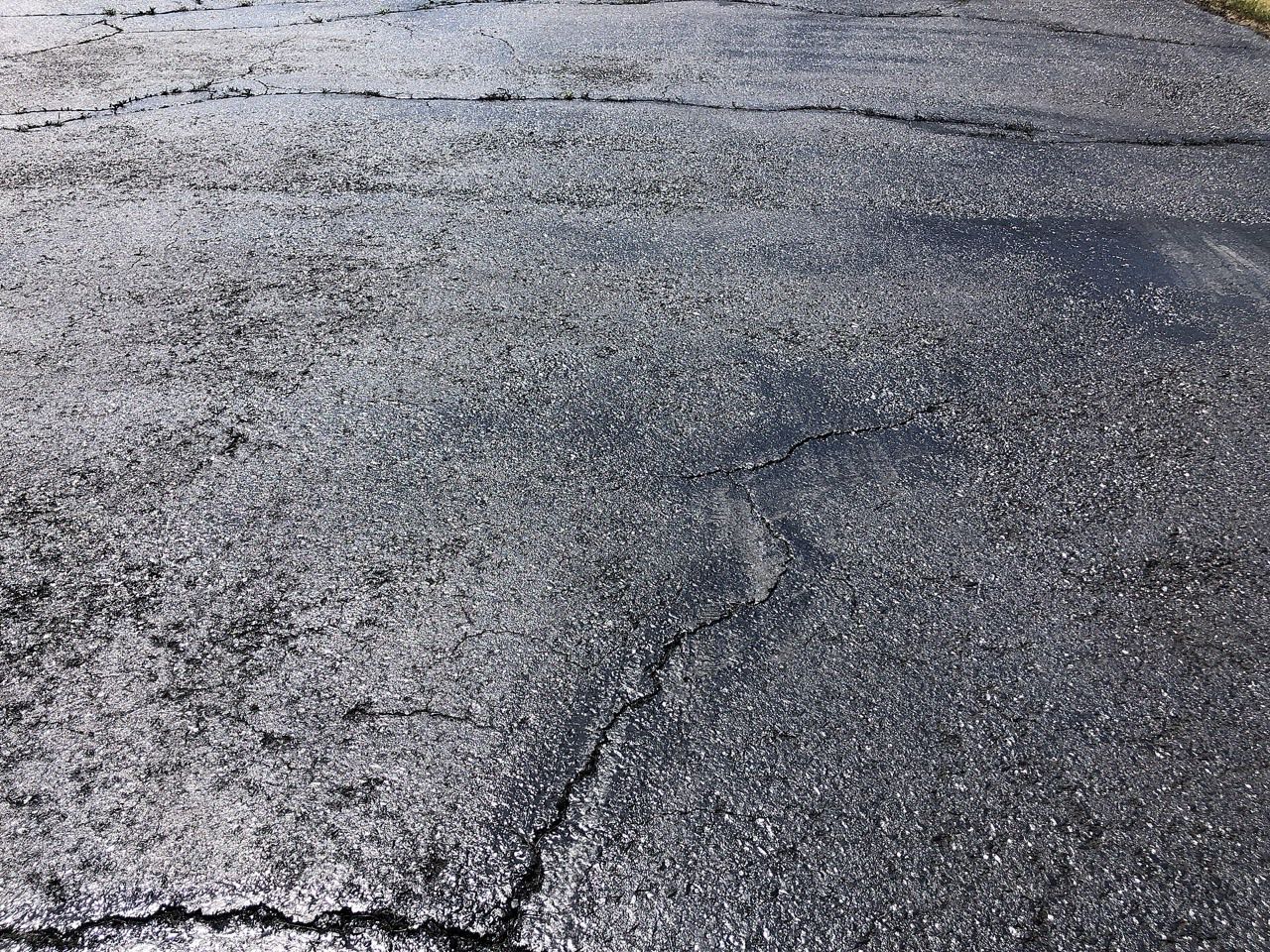
New Jersey Uses More Road Salt Than Any Neighboring State
New Jersey just declared a State of Emergency for winter storms (December 2, 2025). As snow blankets Essex, Union, and Passaic counties, thousands of homeowners are grabbing whatever de-icer they can find at Home Depot or Lowe's.
Here's the problem: 73% are using products that will destroy their driveways by spring.
After 18+ years repairing de-icer damaged driveways across North Jersey, I've seen the same preventable disasters happen every winter. A $15 bag of rock salt leads to a $2,500 repair bill. It doesn't have to be this way.
This guide reveals exactly which products protect your driveway—and which ones will have you calling me for emergency repairs in April.
Why NJ Driveways Are Especially Vulnerable
The 300-Pound Problem
New Jersey uses more road salt per lane mile than any neighboring state—averaging 300 pounds per lane mile. This salt doesn't stay on highways. It gets tracked onto YOUR driveway by every vehicle that pulls in:
- Your car brings salt home from every trip
- Delivery trucks deposit road chemicals
- Visitors track in salt from Route 22 or the Parkway
- Snow plows push treated snow onto your property
Combined with your own de-icing efforts, your driveway faces double the chemical attack.
The Freeze-Thaw Factor
NJ's unique climate creates brutal conditions for asphalt:
- 14+ freeze-thaw cycles per winter (Toronto reported 14 in March 2025 alone)
- Each cycle expands water in cracks by 9%
- De-icers accelerate this damage by keeping surfaces wet longer
- Morning frost, afternoon melt, evening refreeze—repeat daily
When water seeps into tiny cracks and freezes, it pushes the pavement outward. When it thaws, the space contracts. This constant stress causes driveways to crack, crumble, and develop potholes.
The Hidden Math Nobody Calculates
| Choice | Cost Now | Cost by Spring |
|---|---|---|
| Rock Salt (50 lbs) | $8 | $2,500+ repairs |
| Calcium Chloride (50 lbs) | $20 | $0-200 touch-ups |
| Sand (50 lbs) | $6 | $0 damage |
ROI: Spending $50 more on proper de-icers saves you $2,300+ in repairs.
De-Icer Comparison Chart: The Good, The Bad, The Driveway-Destroyers
THE DESTROYERS: Never Use on Asphalt
#### Rock Salt (Sodium Chloride)
Verdict: AVOID - Destroys Asphalt
- How it damages: Creates brine that seeps into asphalt pores, freezes, and expands from within
- Lowest effective temp: 15°F (useless during NJ's coldest nights)
- Hidden costs: Corrodes rebar in adjacent concrete, kills grass, burns pet paws
- Why people use it: Cheap ($5-10 per 50 lbs at Home Depot Linden)
- The reality: That cheap bag costs $2,500+ when your driveway needs repair
Local Warning: If you see white chalky residue on your driveway after snow melts, that's salt crystallization—damage is already happening.
#### Urea (Nitrogen-Based De-Icer)
Verdict: CONDITIONAL - Only Above 25°F
- The problem: Below 25°F, urea causes rapid refreezing and creates dangerous ice sheets
- Proper use: Mild NJ winter days (35°F+) only
- Deceptive marketing: Often sold as "pet-safe" but may be mixed with rock salt
- Check the label: If it contains sodium chloride, it's still damaging
THE PROTECTORS: Safe for Asphalt Driveways
#### Calcium Chloride
Verdict: RECOMMENDED - Best Overall for NJ
- Works down to: -25°F (handles the worst NJ winters)
- Less corrosive: Significantly gentler than rock salt
- Faster acting: Melts ice in minutes, not hours
- Cost: $15-25 per 50 lbs
- Where to buy locally: Home Depot (Linden, Union), Lowe's (Springfield), Ace Hardware (Millburn)
Pro Tip: Flake form works faster than pellets on thick ice. Buy the flakes for heavy storms.
#### Magnesium Chloride
Verdict: RECOMMENDED - Best for Pet Owners
- Works down to: -13°F (handles most NJ conditions)
- Gentler on vegetation: Won't burn grass along driveway edges
- Pet-safe: Minimal paw irritation, lower toxicity if ingested
- Cost: $20-30 per 50 lbs
- Best for: Homes with dogs, properties with landscaping near driveway
NJ Availability: Ace Hardware stores, specialty landscape suppliers, Amazon with Prime delivery
#### Potassium Chloride
Verdict: GOOD - For Mild Days Only
- Works down to: 12°F (limited effectiveness in deep freezes)
- Gentlest option: Minimal damage to any surface
- Safe for plants: Won't harm garden beds or lawns
- Cost: $25-35 per 50 lbs
- Limitation: Won't work during NJ's coldest nights (below 12°F)
Best Use: Supplemental de-icing during milder winter days, or mixing with calcium chloride.
#### Sand
Verdict: EXCELLENT - Zero Chemical Damage
- Works at: Any temperature
- Zero damage: Completely safe for asphalt, concrete, pavers, everything
- Pet and plant safe: No chemicals, no concerns
- Cost: $5-10 per 50 lbs
- Trade-off: Provides traction only—doesn't melt ice
Pro Tip: Mix 4 parts sand with 1 part calcium chloride for the best of both worlds—melting power plus traction, with minimal driveway damage.
Quick Reference Chart
| De-Icer Type | Safe for Asphalt? | Lowest Temp | Pet Safe? | Plant Safe? | Cost per 50 lbs |
|---|---|---|---|---|---|
| Rock Salt | NO | 15°F | NO | NO | $5-10 |
| Calcium Chloride | YES | -25°F | Moderate | Moderate | $15-25 |
| Magnesium Chloride | YES | -13°F | YES | YES | $20-30 |
| Potassium Chloride | YES | 12°F | YES | YES | $25-35 |
| Sand | YES | Any | YES | YES | $5-10 |
| CMA (Acetate) | YES | 20°F | YES | YES | $30-50 |
The Right De-Icer for Every NJ Temperature
Above 32°F (Warming Trend)
Best choice: Sand or potassium chloride - Less aggressive products work fine when ice is thin - Save your stronger chemicals for real cold snaps - Cost savings: Use gentle products when you can
25°F to 32°F (Typical NJ Winter Day)
Best choice: Magnesium chloride - Effective without being aggressive - Perfect for overnight frost or light ice - Pet owners: This is your go-to for daily use
Below 25°F (Deep Freeze)
Best choice: Calcium chloride - The only reliable option at extreme temps - Use sparingly—it's powerful - Apply before ice forms if possible
Below 0°F (Rare but Happens in NJ)
Best choice: Calcium chloride + sand - Chemical melting plus traction - Keep pathways safe until temps rise - This is emergency-level cold—prepare in advance
De-Icer Selection by Surface Type
Sealed Asphalt (Sealcoated Within 2 Years)
You have the most flexibility here: - Calcium chloride or magnesium chloride recommended - Sealcoat provides a protective barrier - Still avoid rock salt—it damages even sealed surfaces over time
Unsealed Asphalt (No Sealcoat or 3+ Years Old)
HIGH RISK - Chemicals penetrate easily: - Stick to sand + minimal calcium chloride - Avoid all chloride products when possible - Priority: Schedule spring sealcoating NOW to protect for next winter
Pavers and Brick Driveways
- Avoid all chloride products near joints—they erode polymeric sand
- Sand only, or calcium magnesium acetate (CMA)
- If using de-icers, apply sparingly and rinse in spring
Near Grass, Gardens, or Landscaping
- Magnesium chloride only—gentlest on vegetation
- Keep products on the driveway, not the borders
- Water down edges on first warm spring day to dilute residue
How to Apply De-Icers Without Damaging Your Driveway
Step 1: Shovel First (Always)
Remove as much snow as possible BEFORE applying chemicals: - Less ice = less de-icer needed = less damage - Use a plastic shovel to avoid scraping the surface - Clear to the edges, not just the center
Step 2: Apply Sparingly
The #1 mistake homeowners make: using too much.
- Correct: Light, even distribution—like seasoning food
- Wrong: Dumping piles and mounds
- The test: If you can see white residue after ice melts, you used too much
Step 3: Wait, Then Remove
- Give the product 15-20 minutes to work
- Shovel away the slush BEFORE it refreezes
- Don't let melt water pool—it becomes ice again overnight
Step 4: Spring Rinse
On the first warm day (50°F+): - Hose down your entire driveway - Focus on edges and low spots where chemicals accumulate - This removes residual chemicals before they cause warm-weather damage
Common Mistakes That Destroy Driveways
- Over-application: More is NOT better—excess sits in pores and causes damage
- Wrong timing: Applying before snow wastes product and extends chemical contact
- Piling near edges: Chemicals drain toward your foundation and landscaping
- Mixing products: Some combinations accelerate corrosion
- Ignoring puddles: Standing melt water refreezes aggressively overnight
Signs of De-Icer Damage (And What to Do About It)
Early Warning Signs (Address Now)
- White residue/staining: Salt crystallization in asphalt pores—rinse thoroughly
- Surface pitting: Small holes from chemical penetration—sealcoating can help
- Fading color: Loss of asphalt binder from chemical attack—time to get a sealcoat quote
- Soft spots: Asphalt feels spongy when walked on—professional assessment needed
Moderate Damage (Professional Repair Recommended)
- Spalling: Surface layers flaking off in sheets
- Shallow cracks: Network of hairline cracks spreading
- Drainage pooling: Low spots forming from erosion
- Edge deterioration: Borders crumbling and breaking away
Severe Damage (Don't Wait)
- Alligator cracking: Interconnected crack pattern resembling scales
- Potholes forming: Complete structural failure beginning
- Base exposure: Seeing gravel through the asphalt surface
- Deep cracks: Cracks wider than 1/4 inch need immediate attention
When to Call a Professional
- Spring Assessment Checklist:
- Count total cracks longer than 6 inches
- Measure any potholes or depressions
- Note areas of discoloration or white residue
- Check for soft/spongy spots by walking the driveway
- Photograph all problem areas
If you count 10+ issues: Professional assessment recommended If you find potholes: Repair before they spread (and damage your car) If surface is degraded: Sealcoating may restore protection and appearance
Frequently Asked Questions
Is rock salt bad for asphalt driveways?
Yes. Rock salt (sodium chloride) accelerates freeze-thaw damage and can cause $2,500+ in repairs over a single winter.
Here's what happens: Rock salt creates a brine solution that seeps into asphalt pores. When temperatures drop, this brine freezes and expands, creating internal pressure that causes cracking, spalling, and potholes. NJ's frequent freeze-thaw cycles (14+ per winter) amplify this damage dramatically.
Additionally, rock salt only works down to 15°F—completely useless during our coldest nights when you need it most. That $5 bag leads to expensive repairs.
What is the best ice melt for asphalt driveways?
Calcium chloride or magnesium chloride, depending on your specific needs.
For most NJ homeowners, calcium chloride offers the best overall performance—working down to -25°F while being significantly less corrosive than rock salt.
If you have pets or gardens near your driveway, magnesium chloride is the gentler choice while still working effectively down to -13°F.
For maximum protection, combine either product with sand for traction and use the minimum amount necessary.
Does calcium chloride damage asphalt?
Minimal damage when used properly—far less than rock salt.
Calcium chloride is considered one of the safest chemical de-icers for asphalt. While no chemical is 100% harmless, calcium chloride's lower corrosiveness and faster action mean it requires less product and less contact time.
The keys to safe use: - Apply sparingly - Shovel slush promptly (don't let it sit) - Rinse your driveway in spring
With correct application, calcium chloride poses minimal risk to properly maintained asphalt.
How do I fix salt damage on my driveway?
It depends on the severity:
| Damage Level | Solution | Approximate Cost |
|---|---|---|
| Minor (white residue, light pitting) | Power wash + sealcoating | $0.15-0.25/sq ft |
| Moderate (shallow cracks, spalling) | Crack filling + sealcoating | $0.50-3/linear ft + sealcoat |
| Severe (potholes, alligator cracking) | Infrared repair or resurfacing | $3-7/sq ft |
| Extensive (base failure visible) | Full replacement | $8-18/sq ft |
The best approach: Address minor damage early in spring before it becomes major. Waiting always costs more.
Is sand better than salt for driveways?
Sand provides traction without any chemical damage, but it doesn't melt ice.
Sand is the only truly driveway-safe option—it causes zero chemical damage and works at any temperature. The trade-off is that it creates traction on top of ice rather than eliminating it.
For NJ homeowners, the ideal strategy: - Use sand for light frost and thin ice - Combine sand with calcium chloride (4:1 ratio) for heavier accumulation - This gives you melting power plus traction while minimizing damage
Can I use kitty litter instead of salt?
Non-clumping clay litter provides emergency traction, similar to sand, but doesn't melt ice.
Important distinctions: - Non-clumping (clay-based): Works for traction, safe for surfaces - Clumping litter: Creates a slippery, dangerous mess when wet—avoid completely
Kitty litter is best as a last-resort option when you're out of proper de-icers. For regular use, sand is cheaper and more effective.
Protect Your Driveway This Winter
You now know which de-icers protect your driveway and which ones lead to expensive spring repairs. Even with the right products, NJ winters are brutal on asphalt surfaces.
FREE Spring Damage Assessment
After winter ends, our experts will examine your driveway for: - Salt crystallization damage - Freeze-thaw crack development - Chemical penetration signs - Base integrity issues - Sealcoat effectiveness
What's included (no obligation): - 30-minute on-site inspection - Written damage report with photos - Repair cost estimates - Prevention recommendations for next winter - Priority scheduling for spring repairs
Why Schedule Your Assessment Early?
- March-April: Repair scheduling fills fast
- May-June: Peak season pricing kicks in
- Book by February 28: Get 15% off spring sealcoating
Contact Us Today
Phone: Call Randy Online: Request Your Free Assessment Email: randy@sealcoatingandstriping.com
For Commercial Property Managers
Don't wait for tenant complaints about parking lot conditions. Our commercial assessment includes: - Parking lot condition report - Liability risk evaluation - ADA compliance check - Multi-year maintenance plan - Bulk pricing for multiple properties
Serving all of Essex, Union, and Passaic Counties including Newark, Elizabeth, East Orange, West Orange, Livingston, Millburn, Summit, Montclair, Bloomfield, Clifton, Passaic, Wayne, Paterson, and 40+ surrounding communities.
Randy's Seal Coating & Striping has been protecting North Jersey driveways and parking lots for over 18 years. We know exactly how harsh winters affect local asphalt—and exactly how to repair and prevent damage.
Ready to Protect Your Asphalt?
Get a free quote for professional asphalt maintenance and protection services. Our team is ready to help extend the life of your driveway or parking lot.