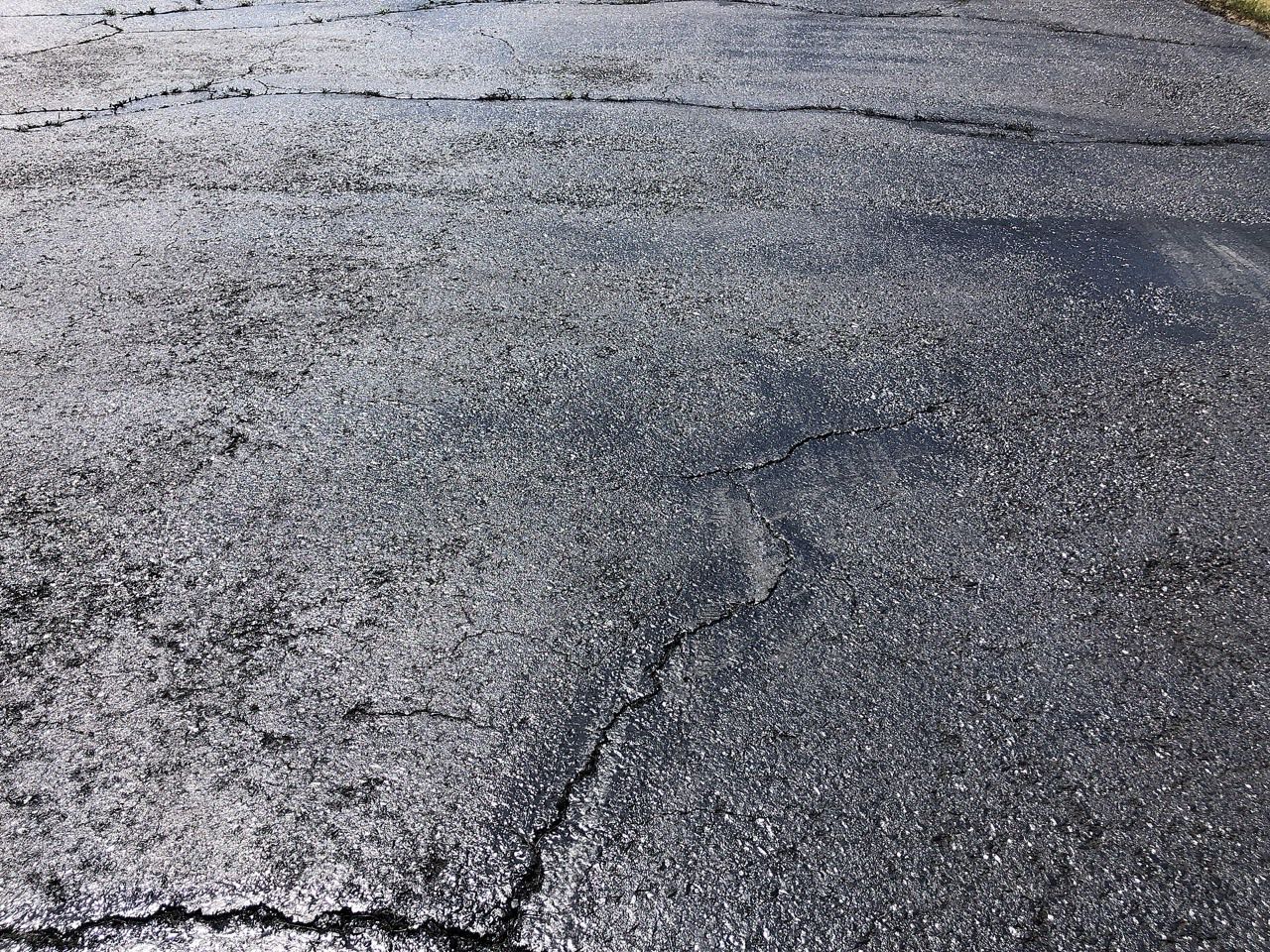
13 Days Below Freezing and Counting
As of February 6, 2026, North Jersey is locked in one of the longest cold snaps in recent memory.
Temperatures across Essex, Union, and Passaic counties have stayed below freezing for over 13 consecutive days. The National Weather Service has issued Extreme Cold Warnings for this weekend, with wind chills expected to drop to dangerous levels. AccuWeather is calling it the "coldest weekend of the winter."
The snow piles from January's 17-inch storm? They're still here. The Bergen Record reports they'll linger for weeks as cold temperatures slow the melting process.
But here's what nobody's talking about: what this cold snap is doing to your driveway.
Why This Winter Is Different
A normal New Jersey winter puts your asphalt through 55 to 75 freeze-thaw cycles. That's bad enough. But this February is delivering something worse — a sustained deep freeze followed by brief thaws that refreeze overnight.
Here's why that matters:
The Accelerated Destruction Cycle
- January's storm saturated everything. Snow melt seeped into every hairline crack, every tiny pore, every gap between your driveway and garage apron.
- The polar vortex froze it solid. Water expands 9% when it freezes. That expansion pushes cracks open from the inside out, like tiny hydraulic jacks working against the asphalt.
- Brief midweek thaws made it worse. This week's "mini-thaw" (temperatures barely above 32°F) melted just enough ice to let water penetrate deeper into newly opened cracks.
- Then it refreezes. Another brutal cold snap this weekend drives temperatures back down, freezing the water that's now deeper inside the pavement structure.
- Repeat. Each cycle pushes the cracks wider and deeper than the last.
This isn't a gradual process you can ignore. One freeze-thaw cycle can turn a hairline crack into a quarter-inch gap. Ten cycles can turn that gap into a pothole. This winter, some driveways in Orange and Elizabeth have gone through rapid back-to-back cycles that cause more damage in two weeks than a typical winter causes in two months.
What We're Seeing Across North Jersey Right Now
After 18+ years of paving and sealcoating driveways across Essex, Union, and Passaic counties, I can tell you: this winter is producing damage I usually don't see until March. We're already getting calls from homeowners who walked out to find new cracks they didn't have before January.
Essex County
Homeowners in Montclair, West Orange, and Livingston are dealing with alligator cracking — that interconnected pattern that looks like reptile skin. The hilly terrain in these towns means water pools at the base of driveways, and when it freezes, the damage concentrates at the bottom where you park every day.
In Orange and East Orange, older driveways that haven't been sealcoated in 3+ years are showing surface raveling — the top layer literally flaking apart as ice pushes aggregate out of the asphalt binder.
Union County
Elizabeth and Linden properties — especially commercial parking lots — are seeing heaving and settling. The clay-heavy soil in parts of Union County holds moisture, and when that moisture freezes, it lifts entire sections of pavement. When it thaws, those sections don't settle back evenly.
In Springfield and Summit, steep driveways are developing edge cracking where water runs off the surface and erodes the base along the sides.
Passaic County
Paterson and Clifton are getting hit hard. The freeze-thaw cycle combined with heavy salt use on commercial lots is accelerating surface deterioration. Salt lowers the freezing point, which actually increases the number of freeze-thaw cycles the pavement experiences.
Wayne and Totowa homeowners with longer driveways are finding transverse cracking — cracks running perpendicular to the driveway — where the asphalt contracts in the extreme cold and literally pulls apart.
The 5 Signs to Check for Right Now
You don't need to wait for spring to assess the damage. Go look at your driveway today and check for these five warning signs:
1. New Cracks That Weren't There in November
Walk your driveway. If you see cracks that are clearly new — sharp edges, no dirt buildup inside — that's freeze-thaw damage from this winter. Mark them with chalk or take a photo. You'll want to compare after the spring thaw.
2. Potholes or Depressions Forming
Feel for soft spots or areas where the surface has dropped. Push your heel into any suspicious areas. If the asphalt gives or flexes, the base beneath has been compromised by ice expansion.
3. Crumbling Edges
Check where your driveway meets your lawn or the road. If the edges are breaking away or you see loose asphalt chunks, freeze-thaw is undermining the unsupported edges.
4. Standing Water When It Thaws
During the brief warm-ups this week, did water pool on your driveway? That means the surface has settled unevenly — freeze-thaw has changed the drainage. Those puddles will freeze again this weekend, making the problem worse.
5. Alligator Cracking
If you see an interconnected web of cracks in any section, that area's structural integrity is gone. The base layer has failed, and no amount of crack filling will fix it. That section needs repair or replacement.
What NOT to Do Right Now
I get it — you see the damage and want to fix it immediately. But mid-winter is the worst time for permanent repairs. Here's what to avoid:
Don't pour cold-patch asphalt into cracks. It won't bond properly in freezing temperatures and will pop out within days. You'll waste money and still need the real repair in spring.
Don't use excessive salt or de-icer on damaged areas. Salt accelerates asphalt deterioration. If you need traction, use sand or kitty litter on damaged sections.
Don't ignore water flow patterns. If you notice water flowing toward your foundation during thaws, create a temporary barrier. Foundation damage from poor driveway drainage is far more expensive than driveway repair.
Don't hire anyone offering "winter paving specials." Proper asphalt work requires sustained temperatures above 50°F. Anyone promising permanent repairs in February is cutting corners that will cost you more later.
What You SHOULD Do Right Now
Document the Damage
Take photos and videos of every crack, pothole, and problem area. Date-stamp them. This documentation serves two purposes: - It helps your contractor give an accurate estimate in spring - If the damage was caused by municipal road issues (water runoff from public roads onto your property), you may have grounds for a claim
Prevent Further Water Penetration
If you have large cracks (wider than a quarter inch), apply a temporary rubberized crack sealant on a day when temperatures hit 40°F or above. This isn't a permanent fix — it's a temporary bandage to keep more water from penetrating deeper during the remaining winter cycles.
Clear Snow Properly
When clearing your driveway: - Shovel or blow snow rather than scraping with a metal plow blade, which can gouge damaged asphalt - Remove snow piles from the edges of your driveway so melt water doesn't seep under the pavement - Keep drainage paths clear so water flows away from the driveway, not onto it
Schedule a Spring Inspection Early
Here's the reality: when this cold snap finally breaks and spring arrives, every paving contractor in North Jersey will be slammed. The combination of this brutal winter and pent-up demand means the contractors who do quality work will be booked weeks out.
We're already scheduling free spring driveway assessments for homeowners across Essex County, Union County, and Passaic County. Getting on the schedule now means:
- First look at your damage before the spring rush
- Accurate estimates based on documented winter damage
- Priority scheduling for repairs during the ideal March-April window
- No cost, no obligation — just honest answers about what your driveway needs
When Spring Hits: The Right Repair at the Right Time
Not all freeze-thaw damage requires the same fix. Here's what to expect based on what you're seeing:
Minor Cracking (Hairline to 1/4 inch) **Fix:** Professional crack filling with hot rubberized sealant, followed by [sealcoating](/services/residential/sealcoating/) to protect against next winter. **When:** As soon as sustained temperatures hit 50°F (typically late March in North Jersey). **Cost:** Most residential driveways: $200-$600 for crack filling, $300-$800 for sealcoating.
Moderate Damage (Alligator cracking, multiple potholes) **Fix:** [Infrared asphalt repair](/services/specialized/infrared-repair/) for localized areas, or partial resurfacing with an [asphalt overlay](/services/specialized/asphalt-overlay/). **When:** April through May for best results. **Cost:** $1,000-$3,500 depending on the area affected.
Severe Damage (Base failure, heaving, extensive cracking) **Fix:** Full [driveway repaving](/services/residential/driveway-paving/) with proper base preparation. **When:** April through October. Earlier is better — it gives the new asphalt maximum cure time before next winter. **Cost:** $3,500-$8,000+ depending on size and base condition.
Parking Lot Damage (Commercial properties) **Fix:** Combination of [pothole repair](/services/maintenance/emergency-pothole-repair/), [crack sealing](/services/residential/crack-repair/), [line re-striping](/services/commercial/line-striping/), and [commercial sealcoating](/services/commercial/sealcoating/). **When:** Schedule the assessment now. Plan the work for April-May before your peak season. **Cost:** Varies widely. We provide detailed proposals with priority-based repair plans.
Don't Wait Until the Damage Is Worse
Every remaining freeze-thaw cycle this winter makes existing damage worse. You can't stop the weather, but you can:
- Document now so nothing gets missed
- Prevent water infiltration where possible
- Get on the spring schedule early before every homeowner in North Jersey has the same idea
Call Randy Seal Coating & Striping at Call Randy or request a free quote to schedule your spring assessment. We've been protecting driveways and parking lots across Essex, Union, and Passaic counties for over 18 years — and after this winter, your asphalt is going to need us.
Randy Seal Coating & Striping serves 40+ cities across Essex, Union, and Passaic counties including Orange, Elizabeth, Paterson, Montclair, West Orange, Livingston, Springfield, Summit, and Wayne. See all service areas.
Ready to Protect Your Asphalt?
Get a free quote for professional asphalt maintenance and protection services. Our team is ready to help extend the life of your driveway or parking lot.