How Thick Should an Asphalt Driveway Be in New Jersey?
The New Jersey Asphalt Pavement Association, writing with NJDOT, lists a residential drive as 1½ inches of surface course over 3 inches of asphalt base course. That sits on 4 inches of compacted stone, or 6 inches on poor soil. That is 4½ inches of asphalt in all. The two other guides on this page put 3 to 3½ inches of asphalt over a stone base. Whichever design you choose, get the compacted inches of each layer in writing. Then check the delivered tons against the size of the driveway.
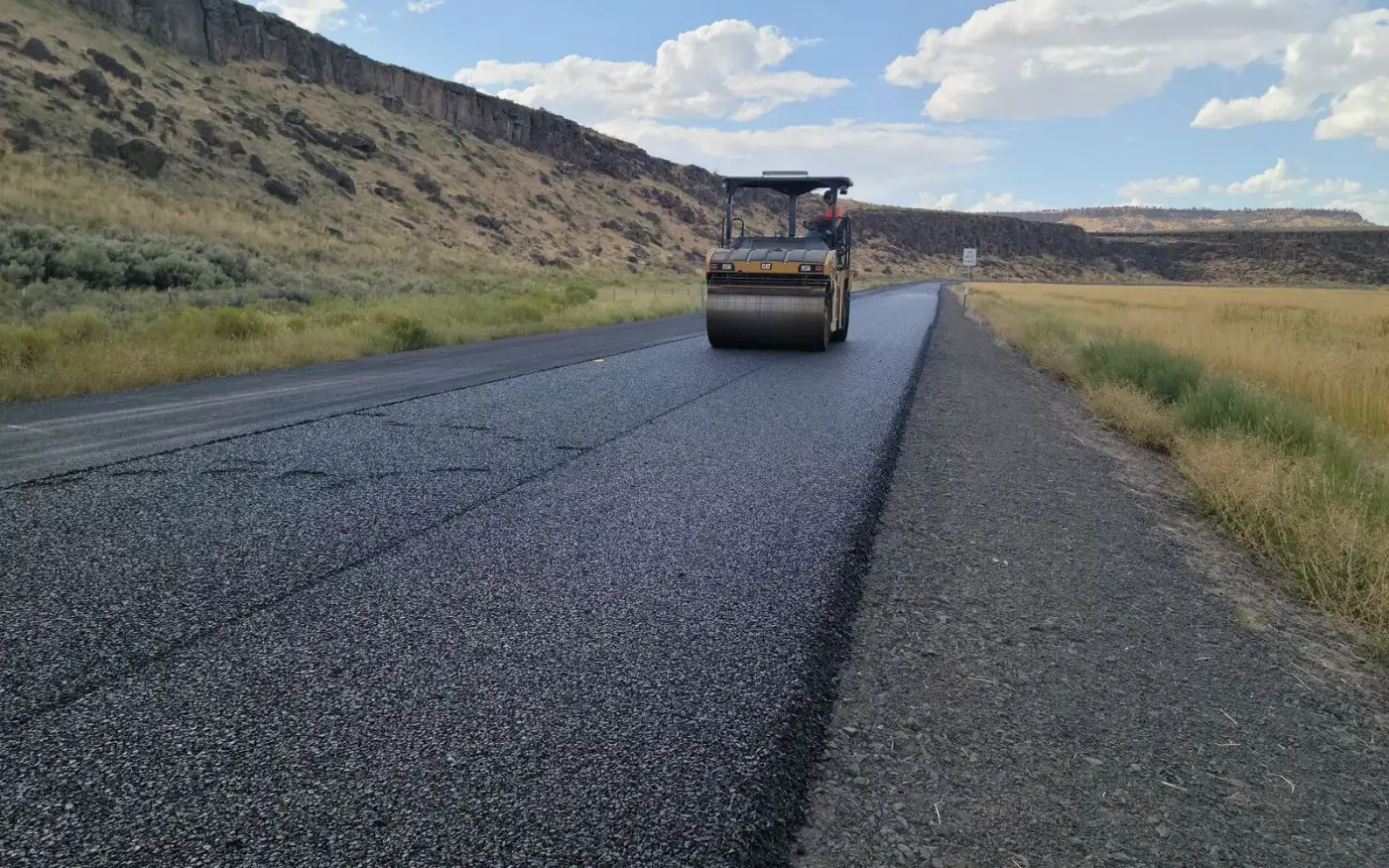
Three things to put in writing
- The compacted thickness of each asphalt layer, in inches.
- The depth and type of the stone base under it.
- The mix for each layer, such as 9.5L64 on top.
The New Jersey Asphalt Pavement Association tells homeowners to “Specify a minimum compacted thickness.” NAPA, the national asphalt association, says a professional contract should include the thickness of the pavement.
Residential Driveway Designs, Layer by Layer
An asphalt driveway is built in layers. In a stone-base design, a compacted stone base goes down first, with one or two layers of hot mix asphalt on top. A full-depth design skips the stone and uses more asphalt instead. Here is what three published guides say for a home driveway.
On a phone, swipe the table sideways to see every column.
| Source | Total asphalt | Top (surface) layer | Asphalt base layer | Stone base |
|---|---|---|---|---|
| New Jersey Asphalt Pavement Association design guide (with NJDOT) | 4½ in. | 1½ in. (9.5L64 mix) | 3 in. (12.5L64 or 19L64 mix) | 4 in. dense-graded aggregate; 6 in. on poor soil |
| Driveway brief hosted by the Asphalt Institute (Colorado association, 2005) | 3½ in. | 1½ in. | 2 in. bottom course | 6 to 8 in. crushed aggregate |
| Colorado Asphalt Pavement Association driveway brief, 2020 | 3 in. over stone, or 4½ to 5½ in. full-depth with no stone | Not split by layer | Not split by layer | 4 in. aggregate; 6 in. on poor soil |
The New Jersey guide is the one written for this state. It says the hot mix should be designed, mixed and built to NJDOT's Standard Specifications for Road and Bridge Construction. It also sets a minimum width of 10 feet for a single-car driveway. The Colorado association says its minimums suit cars and light trucks plus the occasional heavier service or delivery truck.
None of these guides prices the work. For what a driveway costs in New Jersey, see our asphalt paving cost guide.
Compacted Inches, Not Loose Inches
Hot mix comes out of the paver loose and gets thinner under the roller. NAPA's Asphalt Paving Handbook puts the rolldown for a typical dense-graded mix at about 25 percent. Its example: a lift meant to be 2 inches when compacted must be laid about 2½ inches thick. So a tape measure in fresh, loose asphalt reads more than the finished layer will.
The New Jersey guide's table lists minimum compacted thickness, and it tells homeowners to specify one. A quote that says “3 inches” without the word compacted leaves room for two readings. NJDOT checks thickness on its own roads with full-depth cores cut from the finished pavement. For a driveway, the tons check below needs only the delivery figures.
Check a Quote by Its Tons
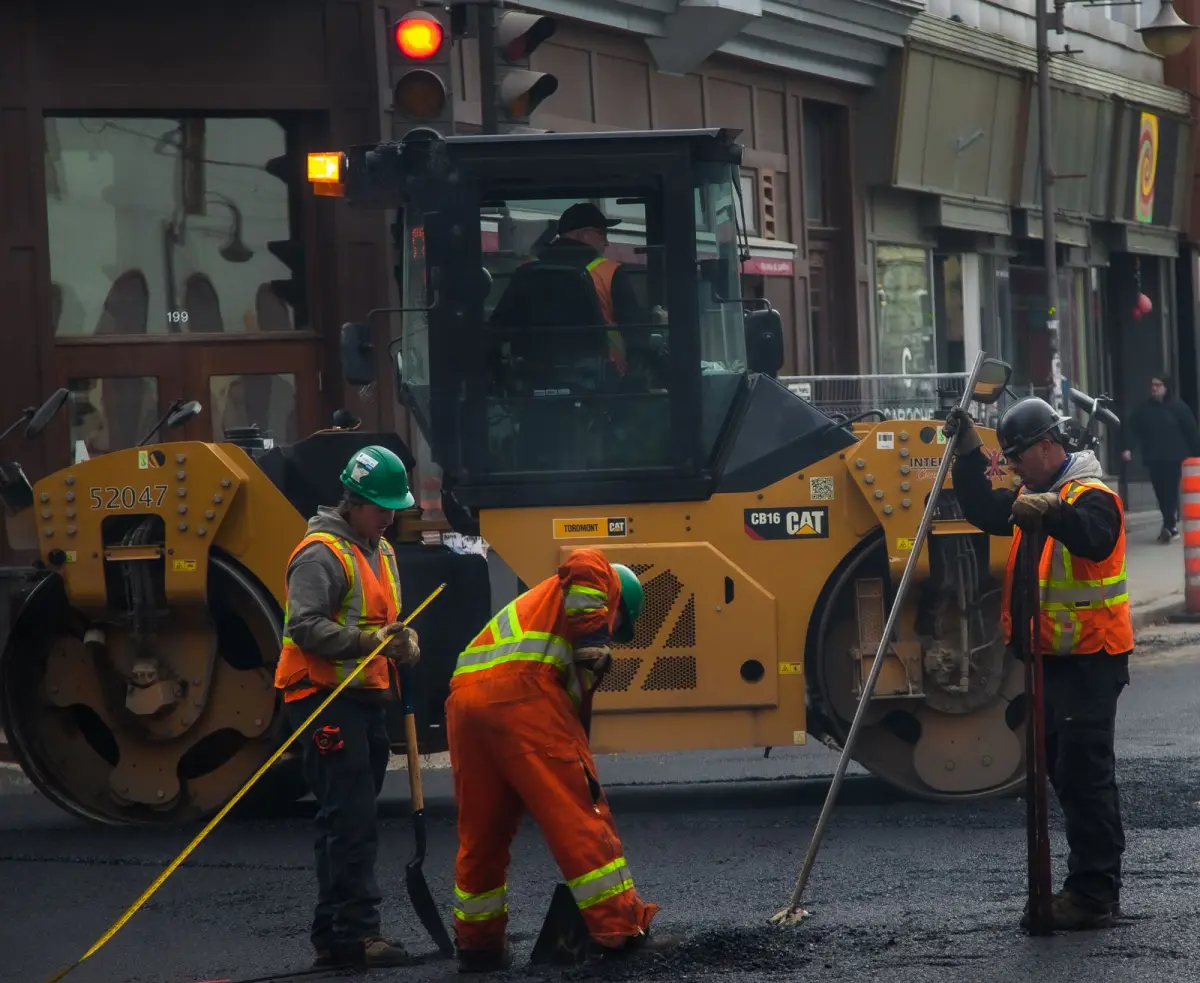
NJDOT pays for hot mix asphalt on its roads by the ton, measured from certified weigh tickets. Virginia DOT bases its application rates on 110 pounds of hot mix per square yard for every inch of compacted thickness. The Asphalt Institute says compacted asphalt typically weighs 142 to 148 pounds per cubic foot. That works out to about 107 to 111 pounds per square yard per inch, so the 110 figure sits inside that range. The table uses it.
| Driveway | 2 in. | 3 in. | 3.5 in. | 4.5 in. |
|---|---|---|---|---|
| One car, 10 × 40 ft | 4.9 tons | 7.3 tons | 8.6 tons | 11.0 tons |
| Two cars, 20 × 40 ft | 9.8 tons | 14.7 tons | 17.1 tons | 22.0 tons |
| Long two-car drive, 1,500 sq ft | 18.3 tons | 27.5 tons | 32.1 tons | 41.3 tons |
To work it out for your own driveway: square feet divided by 9 gives square yards. Multiply by the compacted inches and by 110, then divide by 2,000 for tons. The Asphalt Institute shows the same kind of sum in cubic feet. Its example is a 10 by 25 foot area paved 4 inches thick, which comes to about 6.1 tons at 148 pounds per cubic foot.
- Ask for the delivery tickets, or the total tons, when the job is done.
- If the tickets add up to well under the table for the thickness you were quoted, ask the contractor to explain the difference.
- When a top layer and a base layer use different mixes, ask for the tons of each, and check each against its own thickness.
Why a Layer Cannot Be Too Thin for Its Stone
In NJDOT's mix names, the first number is the nominal maximum aggregate size, in millimeters. The Asphalt Institute says a lift should be at least 3 times that size, so the stones can align during compaction and reach the required density. NJDOT requires paving lifts at least 4 times the nominal maximum aggregate size. The Federal Highway Administration says it is desirable for the ratio to be at least 3 for fine-graded mixes and at least 4 for coarse-graded ones.
- 9.5 mm mix (the top layer in the New Jersey association's driveway design): 4 times 9.5 mm is 38 mm, about 1½ inches.
- 12.5 mm mix: 4 times 12.5 mm is 50 mm, about 2 inches.
- 19 mm mix: 4 times 19 mm is 76 mm, about 3 inches.
The Asphalt Institute gives a plain example of what goes wrong. If a ½-inch top-size mix is placed at 1 inch compacted depth, the mat may pull and tear, and the stones may be broken by the rollers.
NJDOT also sets the least compacted thickness it accepts in a finished surface layer on its roads: 1.00 inch for 9.5 mm mix, 1.25 inches for 12.5 mm and 2.00 inches for 19 mm. Those are acceptance limits for cores taken on NJDOT roads, not targets for a driveway.
What New Jersey Adds: Frost, Water and the Stone Base
The state building code sets a frost line depth for house footings: 36 inches for Mercer and Middlesex counties and every county north of them, and 30 inches for Monmouth and Burlington counties and the counties south. That is a rule for building foundations, not for driveways. Union, Essex, Passaic, Middlesex, Bergen and Morris counties are all in the 36-inch zone.
Water is what the asphalt guides warn about. NAPA says standing water is the leading cause of driveway failure. The New Jersey association calls proper drainage imperative and good surface drainage essential. It wants the ground beside the pavement graded so water runs away and does not stand on the pavement's edge. The Colorado brief asks for a surface slope of at least a quarter inch per foot.
- Stone base material: NJDOT's dense-graded aggregate (DGA) is broken stone, crushed gravel or blast furnace slag, made to a set gradation.
- Layers: NJDOT allows no more than 8 compacted inches of DGA per layer. The total must land within ½ inch of the specified thickness.
- Soil: the New Jersey and Colorado guides both go from 4 to 6 inches of stone on poor soil.
Look Closely at the Edges
A driveway's edges often border lawn or a curb rather than more pavement. NAPA's handbook notes that density across a mat is typically lowest at an unsupported edge. The Federal Highway Administration's distress manual lists edge cracking as its own type of distress on pavements with unpaved shoulders.
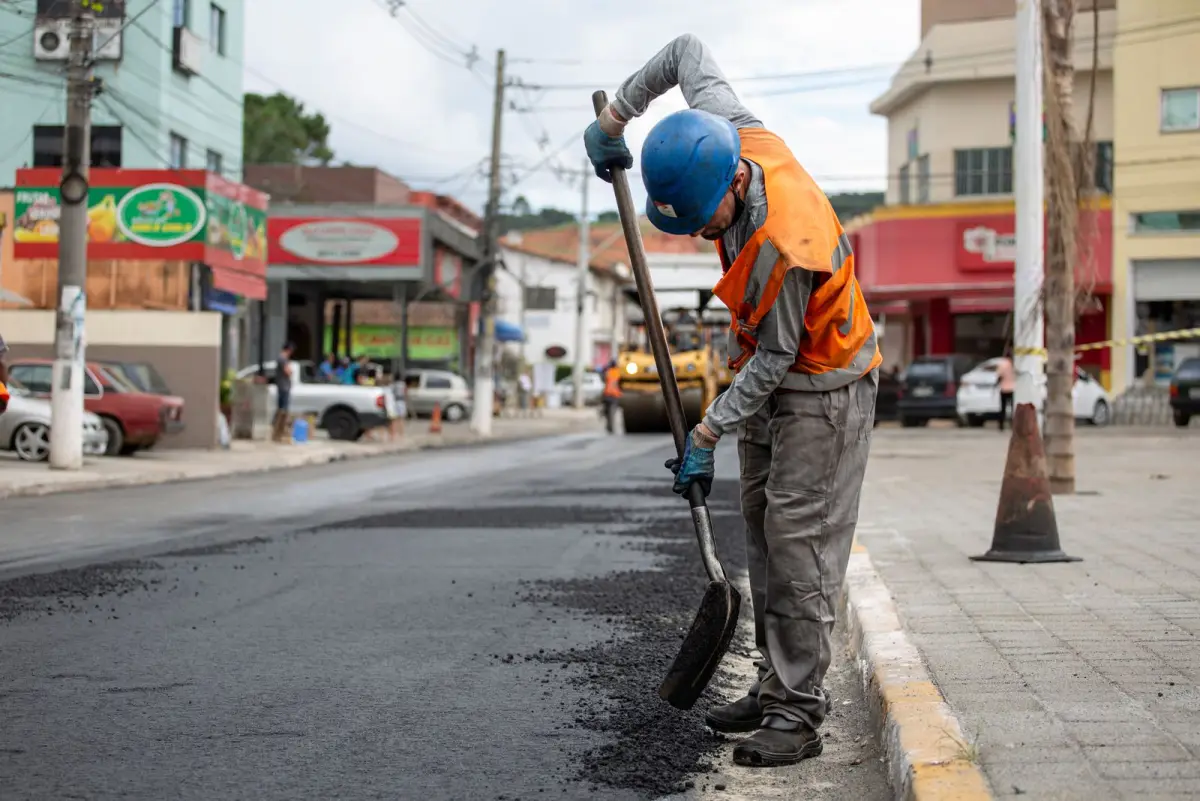
When you look over a finished driveway, check that the edges are full height and compacted. Also check that the ground beside them is graded to carry water off. Where the driveway meets the street, the town may have its own rules for the apron. Our driveway apron guide for New Jersey covers who pays and what permits apply.
When to Ask for a Thicker Design
- Poor soil: the New Jersey and Colorado guides both deepen the stone base from 4 to 6 inches.
- Heavier vehicles: the New Jersey guide says asphalt pavements must be designed based on traffic, with heavy truck traffic the primary concern. The Colorado minimums are written for cars and light trucks plus occasional service and delivery trucks.
- Full-depth asphalt: the Colorado brief gives 4½ inches of asphalt with no stone base, or 5½ inches on poor soil.
Once it is down, new asphalt needs time before heavy use. See how long new asphalt takes to cure in New Jersey.
Questions From Homeowners
How thick should the stone base under an asphalt driveway be?
The New Jersey Asphalt Pavement Association lists 4 inches of dense-graded aggregate base course under a residential drive, or 6 inches on poor soil. The Asphalt Institute-hosted brief says 6 to 8 inches of crushed aggregate is usually adequate. NJDOT's road specification limits each compacted layer of dense-graded aggregate to 8 inches.
What do mix names like 9.5L64 or 12.5M64 on a quote mean?
They are NJDOT mix designations. The first number is the nominal maximum aggregate size in millimeters. The letter is the design compaction level for traffic, L for low and M for medium. The 64 is the high-temperature grade of the asphalt binder. A quote that names the mix is easier to compare than one that says only blacktop.
How many tons of asphalt does a 20 by 40 foot driveway take?
At 3 compacted inches, about 14.7 tons, using the 110 pounds per square yard per inch basis Virginia DOT uses for application rates. At 4½ inches it is about 22.0 tons. The Asphalt Institute says compacted asphalt typically weighs 142 to 148 pounds per cubic foot, which works out to about 107 to 111 pounds per square yard per inch, so treat these as close estimates.
Does a thinner layer need a warmer surface to pave on?
Yes, under NJDOT's rules for its roads. The surface being paved must be at least 50°F for a layer of 1 inch or less, 41°F for a layer between 1 and 2 inches, and 32°F for 2 inches or more. The thinnest layers need the warmest surface.
How thick should new asphalt be over an old driveway?
The Asphalt Institute-hosted brief says an overlay of 1.5 to 2 inches of surface mix is usually sufficient. Before the overlay, distressed areas such as weak spots, holes and large cracks are cut out and patched with hot mix, and a tack coat is recommended on old weathered surfaces.
Comparing Driveway Quotes in New Jersey?
Randy Seal Coating & Striping paves driveways in Union, Essex, Passaic, Middlesex, Bergen and Morris counties. Ask us for a written estimate. Start with the driveway paving page, or send a note through the contact page.
Sources
Every source below was read on November 21, 2026.
- New Jersey Asphalt Pavement Association: Asphalt Pavement Design Guide, Sixth Edition 2019 (PDF), Residential Drives, page 15
- Asphalt Institute (Colorado Asphalt Pavement Association article): Best Practices for the Use of Asphalt Driveways, 2005 (PDF)
- Asphalt Institute: Engineering FAQs (lift thickness, weight of compacted asphalt, quantity example)
- Colorado Asphalt Pavement Association: Asphalt Driveways technical brief, March 2020 (PDF)
- NAPA: Hiring an Asphalt Contractor for Driveways
- NAPA Asphalt Paving Handbook, section 7.5: Layer Thickness
- NAPA Asphalt Paving Handbook, section 9.3: Longitudinal Joints
- NJDOT Standard Specifications for Road and Bridge Construction, 2019, with changes through November 20, 2026 (PDF): sections 109.01, 302.03.01, 401.03.07 (Tables 401.03.07-1 and 401.03.07-6), 401.04, 901.10 and 902.02.01
- Federal Highway Administration Tech Brief FHWA-HIF-21-021: Techniques and Tools for Improving Density (PDF)
- Federal Highway Administration: Distress Identification Manual for the LTPP Program (PDF), edge cracking
- Virginia DOT IIM-LD-158.13 Pavement Designs (PDF), application rate note
- N.J.A.C. 5:23-3.21, Uniform Construction Code (PDF): frost line depth in Table R301.2
- NJ Department of Community Affairs, Construction Code Communicator, Fall 2023 (PDF): Frost Depth
Photos: Tom Shamberger, Alex Albert and Alexandre Rezende on Pexels, used under the Pexels license.